Showing posts with label environment. Show all posts

Sunday, May 31, 2015

LED Grow Light for Plants [Review]

Growing plants is a science and art. Since we have gone away from gardening and farming as our primary jobs, we have lost a lot of working knowledge. Climates have changed. Weather patterns have changed. And, the soil has changed. You cannot just put seeds in the ground and have them grow. In our growing zone, starting seeds indoors (winter sowing) is recommended. An LED Grow Light is a great gardening accessory for seed starting, germination, cloning, growing herbs and growing leafy vegetables year round. Red and blue wave lengths create a soft purple glow to help seeds and plants grow.


GrowHobby LED Grow Light     
Rating: total green check marks out of 5.

The Good
The Not So Good
Solid metal construction
Requires a bulb socket
Effective at helping seeds germinate and plants grow

Energy-efficient (uses 12 watts)

Does not require replacement bulbs


GrowHobby LED Grow Light is basically a big light bulb with small LED lights made from German imported osram chipsets. The body is made from solid (thick) oxidized aluminum casing. The casing design looks a lot like a fan blade on a jet engine and allows for better heat distribution so that the plants do not get burned and you do not have to use heat sinks or fans. The construction of the LED Grow Light is solid and high quality. My husband, who is a Mechanical Engineer, appreciated the high quality design.

The Grow Light is very energy-efficient, requiring only 12 watts to use with an 800 lumens output. The Grow Light does not need replacing. The company states that it should last for more than 50,000 hours. I did a little calculation: if you use the Grow Light for 12 hours a day, it should last for almost 12 years! That's a very long time and definitely worth the investment!

Benefits of a Grow Light
  • Easily bring a dull plant back to life
  • Perfect for seedlings, cuttings or cloning, and germinating
  • Suitable for all phases of plant growth (not enough power for full fruiting)
  • Fits nicely inside small spaces without damaging heat build up
  • Smart LED technology means no mercury
  • No need to replace burnt bulbs
  • Perfect for herbs, indoor plants, leafy vegetables, small fruiting plants, orchids, terrariums, hydroponic systems, aquarium plants and the like
Usage: The LED Grow Light screws into any standard light socket or lamp (e26 base). I purchase the GrowHobby Hanging Light Socket, separately, to go along with the LED Grow Light. I keep my seedlings first on the bay window where they receive filtered natural light and then I move them into the breezeway once the temperatures begin to climb in the Spring. This setup required for me to order the hanging light socket.

In the breezeway, I placed the seedlings on the table and weaved the Grow Light in the hanging light socket around the hook that was installed in the wooden beam on the ceiling. The LED Grow Light does have some weight to it, but the small hook held up the Grow Light and the hanging light socket well. The LED Grow Light was on for about 6 hours a day on the days that were cloudy or rainy.

Results: I am glad that I ordered the hanging light socket separately because it has given me freedom to put the seedlings and the light exactly where I want. I can move the LED Grow Light to exactly where I need it. In the past, I have had limited success with winter sowing because the plants ends up getting too leggy and flop over. Using the LED Grow Light, I felt like they did not get as leggy and grew more leaves.

I also used the LED Grow Light for a Purple Passion plant that did not overwinter well on my bay window and was not doing much better in the sunny breezeway. The LED Grow Light seems to have helped it to start growing leaves again, so I look forward to it coming back stronger and fuller.

I recommend this product for a gardener of any level. Though the initial investment is significant, remember that this LED Grow Light should last you for a very long time.


Disclosure: I received some of the products to facilitate this review. No other compensation was received. All opinions are my own and are honest.


Saturday, September 6, 2014

Earth Weave Area Rug [Giveaway]


earthweave-rug-giveaway-revised

Welcome to the Earth Weave Carpet Mills Area Rug Giveaway, hosted by the Green Moms Network. Today we’re excited to share a truly safe carpet company with you, and offer you the chance to win one of their safe, non-toxic and natural area rugs!

 When you’re thinking about re-carpeting your home, what are the things that are most important to you? Many people rarely think about the toxins contained in most carpets, padding and the adhesives used to install them.

Indoor air has been found to contain 10 times as many pollutants as outdoor air. So it’s increasingly important for us to be aware that toxins that will be emitted into the air in our homes from carpet, that we otherwise wouldn't think much about.

Did you know that new carpets contain volatile organic compounds (VOC's), which include acetone, benzene, ethyl benzene, formaldehyde, styrene and toluene? Many of these compounds are listed on the Environmental Protection Agency’s register of Extremely Hazardous Substances.

They also contain substances known to be carcinogenic, including p-Dichlorobenzene, styrene (classified as a reasonably anticipated carcinogen) as well as other chemicals that are known to cause nerve damage, respiratory illness and hallucinations. In addition, new carpets are usually treated with other toxic chemicals, including brighteners, artificial dyes flame retardants, stain repellents, and moth proofing (a known neurotoxin).

And you’re not safe just because your carpet is Green Label Plus Certified. These carpets contain harmful chemicals, which are deemed to be low emitting in regard to volatile organic compounds (VOC’s) but the SBR adhesive buried within the backing is made up of more than 20% stryene and over 70% butadiene. This is where the term Styrene Butadiene Rubber (SBR) comes from. Even synthetic carpets such as nylon, polypropylene, and polyester carpets can display the Green Label Plus Certification. Consumers are not made aware that chemical laden synthetic carpets meet the same testing standards as the wool carpets that claim to be "green", "eco"' "natural" etc.

Even the padding used under most carpets is not safe! According to studies, the padding most carpet companies use contains flame retardants that are considered toxic.

Fortunately, there is one company that offers all natural, non-toxic carpet, area rugs and padding – Earth Weave Carpet Mills Inc. Their innovative product, Bio-Floor, is made using undyed, untreated, wool together with hemp, cotton, jute and natural rubber.

Don’t be fooled by other companies that claim to be “green” or “natural.” Bio-Floor is the only truly nontoxic, all natural, healthy carpet made in North America. It’s great for people and families concerned about the toxins in their home and the environment.

earth-weave-construction

Earth Weave starts with the finest, most resilient wool available - British wool. There are no dyes, pesticides, moth proofing or stain protections used, which contain toxic chemicals negatively impacting your health. The primary backing they use is a combination of cotton and hemp (which is a great fiber due to its strength, durability and mold/mildew resistance). Earth Weave is the only carpet manufacturer in North America to incorporate an all-natural primary backing where the rest of the industry uses synthetic polypropylene for their primary.

The adhesive used to lock the wool yarns into place is natural as well, and is derived from the rubber tree. Paired with an all-natural jute secondary backing, the carpet is entirely biodegradable.

If you’re thinking about re-carpeting your home or business be sure to ask for Earth Weave at a carpet dealer near you. It’s the purest, healthiest carpet on the market, so you can feel confident it’s the best choice for your family.

Enter the Giveaway


Now onto the giveaway! If you’ve read this entire post, you’ll understand why I’m so excited to offer my readers a chance to win a completely safe and natural 4’ x 6’ area rug from Earth Weave Carpet Mills. The winner will receive the Pyrenees Wheat Rug, valued at $375! This mid-weight rug (38 oz.) is constructed with a distinct two color pattern. It’s very durable and soft, and made from the finest natural un-dyed, untreated wool available.

This giveaway runs through September 28, 2014 at 11:59 pm EST and is open to US residents only. Enter for your chance to win via the Rafflecopter form below. Good luck!

a Rafflecopter giveaway
Disclosure: All Natural Katie was not compensated for this post and is not responsible for prize fulfillment. Please contact Chrystal at Green Moms Media with questions about this giveaway or for help organizing one for your brand.


Thursday, August 7, 2014

Soap Nuts Liquid Laundry Detergent [Review]

Ever since I switched to natural cleaning products, I cannot stand the harsh smells of some of the popular laundry detergents. Not only are the synthetic scents not healthy to breathe, but the chemicals and brighteners that are contained within the big plastic bottles are harmful to our bodies and to the environment. While there are many natural and non-toxic alternatives to laundry detergent, soap nuts takes the #1 spot for the most natural. Soap nuts produce a natural saponin that combines with water to create a 100% non-toxic laundry detergent. Soap Nuts Liquid Laundry Detergent is a natural and non-toxic way to clean your clothes.

Soap Nuts Liquid Laundry Detergent  (8 oz, 120 HE wash loads, $18.95)
 
Rating: total green check marks out of 5.

The Good
The Not So Good
Liquid easier to use than soap nuts
Cloth diapers (2 days old) were still stinky
Made with USDA Organic Soap Nuts

Chemical-free extraction process

Contains low-toxicity preservatives
(caprylyl glycol, phenethyl alcohol)


The natural laundry detergents I have used for a few years come in a powder form. While I do appreciate the natural and non-toxic ingredients, I have to rinse my hands after scooping because the powder ends up getting on my fingers. I love that Soap Nuts Liquid Laundry Detergent is in a pump bottle. For my top loading washing machine, I use three pumps. No mess. No soapy hands.

Soap Nuts Liquid Laundry Detergent contains three ingredients: Soap Nuts Liquid (extracted with water and chemical-free filters from USDA Certified Organic soap nuts), Caprylyl Glycol (preservative rated 0 by EWG Skin Deep Database), Phenethyl Alcohol (preservative rated 1 by EWG Skin Deep Database).

The bottle shipped in a box and was protected fairly well. No damages to the box or the bottle. The liquid laundry detergent comes in a plastic bottle with a screw cap. The pump comes separate. Initially, I could not screw on the pump top, so I asked my husband for help. He was able to attach it within one minute. After a few pumps to get the liquid in the line, I was ready for laundry.

The first wash included two day old cloth diapers, including ones that were stained with poop. After the usual cloth diaper wash routine, I smelled some of the inserts that previous had poop on them. They did not smell clean. I went through another wash routine with the Soap Nuts Liquid Laundry Detergent (using 2 pumps each time for a small cloth diaper wash load). After the second wash, the cloth diapers smelled a little bit cleaner, but there was still some remaining dirty diaper smell.

The next wash included regular clothes and bath towels. I used 3 pumps for a large wash load. The clothes came out smelling clean. I have done a few more washes of regular clothes and dirty towels with Soap Nuts Liquid Laundry Detergent and have been pleased with the results.

The Soap Nuts Liquid does have a slight fragrance to it. I did some research on the preservatives and read that Phenethyl Alcohol is also used as a fragrance ingredient. This preservative could be contributing to the smell of the soap nuts liquid. The smell washed out and did not linger on the clothes. I need to look into whether this smell is the natural soap nuts smell or one of the preservatives that is used. Read more about the low toxicity preservatives that Soap Nuts chooses.

Soap Nuts Liquid Laundry Detergent is easy to use, non-toxic for my family and for the environment and is effective. Though I will continue to use my other natural laundry detergent for the cloth diapers, I will use Soap Nuts Liquid Laundry Detergent for regular laundry.

Disclosure: I received one or more of the products mentioned above for free using Tomoson.com. Regardless, I only recommend products or services I use personally and believe will be good for my readers. All opinions are my own. 


Monday, August 4, 2014

Proper Alkaline Battery Disposal [#CTWW]

Somehow, Small Footprints' Change the World Wednesday challenges always come at just the right time. Either I recently accomplish a small green milestone or I am currently struggling with a change. Last week, I decided to update the car emergency kits. I came upon some batteries and decided to do a battery inventory. The battery drawer had some loose batteries. After my husband said that those batteries are mostly dead, I was about to throw them into the trash. Until a little voice inside my head reminded me that I once read about not throwing batteries into the trashcan. Indeed, a quick search revealed that alkaline batteries (the ones I have on hand) are indeed toxic. Alkaline batteries should NOT be thrown into the trash. Alkaline batteries should be disposed of properly, at a location that accepts them.


This week's challenge:

If you are not using rechargeable batteries, please make plans to buy them when you next need batteries. As you replace single-use versions, be sure to recycle them rather than toss them into the trash bin.


OR ...

If you have already made the switch to rechargeable batteries, please find one single-use item in your home and replace it with a reusable version.

As mentioned in Reduce Footprints challenge post, 3 billion single use batteries are sold each year! Most of these batteries end up being thrown out with trash. Batteries degrade over time and leak toxic chemicals into the landfill. These toxic chemicals end up in the water and in the soil. 

After realizing this fact, I looked up recycling facilities for alkaline batteries. We live in a big city, so I hoped for several companies accepting alkaline batteries. Results: one company. Best Buy does have a recycling program, but they do not take alkaline batteries. I emailed the company for a quote for 2 pounds of batteries. Since I had such a small amount, they proposed that if I like their Facebook page and/or write a review, I can drop them off for free. Now, I am wondering if I should save up batteries and do a big disposal once per year. I do not mind paying for the alkaline batteries to be disposed of properly. 

Our battery usage is fairly small. I do not purchase battery operated toys for my son. Any battery-operated toys that are gifted are either exchange, used until batteries run out or are used without batteries. The majority of battery usage is for television remotes, flashlights (seldom used) and for emergency purposes. I do not watch television during the day. Our total television usage is less than 10 hours per week and is mostly watched by my husband when he is home. The remote batteries last for a long time. Either way, we are using batteries and we can be greener about it, especially since they need to be disposed of properly.

After my research and reflection on battery usage in our house, I told myself that I must look into rechargeable batteries. While we do have a few of them already, we are not using them. Last year, I purchased 2 AA USB rechargeable batteries to add to the emergency kit. Though rechargeable batteries are an investment, they have come down in price over the years and they will save me money in the long run. Next shopping trip, purchase rechargeable batteries!

>> Do you use any rechargeable batteries are home?? How??


Tuesday, May 20, 2014

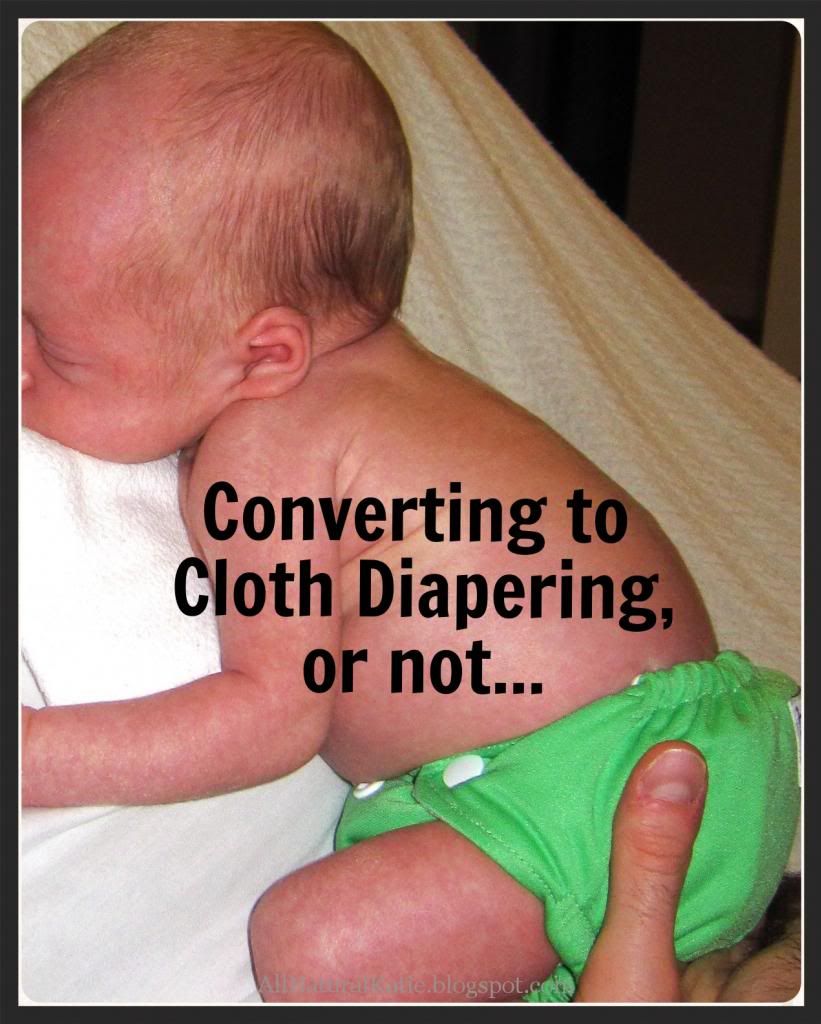
Converting the Husband to Cloth Diaper, or Not [#CTWW]

I have made it such a long way toward living green, yet I have so much longer to go. Is this not always the case? Between trying to change a husband that might not understand some of my motives behind living green to raising a toddler to expect green living as the standard practice, I feel both challenged and empowered. When I thought of a big green living obstacle that I have overcome, there were many, but one stood out in my mind - cloth diapering!

This week's challenge:

This week share environmental good news. Unlike the challenge we did in November (see it HERE), which asked that we talk about all good news, let's focus on our personal triumphs. For example, if you were able to overcome a green-living obstacle (recycling, composting, etc.), we'd like to share in your good news. Perhaps you are preparing to plant a garden this year or have upgraded appliances to energy-efficient models ... let us celebrate with you. Maybe you've realized successes like turning off the water while brushing your teeth or turning off lights when you leave the room ... we want to be inspired by your achievement. The idea, this week, is to share all the good, green stuff in our lives.

I knew I wanted to cloth diaper even before I became pregnant. The concept of cloth diapering was foreign to my husband, though he himself was cloth diapered. I spent the whole pregnancy trying to convince him of the benefits. I even had a "show and tell" with the cloth diapers that I had acquired. He was firmly against it. Maybe it was the foreignness of the idea or maybe it was the horror stories he had heard about cloth diapering, he said, "no!" It was his hard limit. 

A lot of persistence on both of our parts resulted in a decision - we will use both cloth and disposable diapers during a trial period. If the cloth diapers did not work out during the trial period, we would use the most non-toxic disposable diapers that were available to us.

During my maternity leave, we make the decision that I was going to leave the corporate world and stay at home with the baby. After this decision was made, I knew that I could make my goal of cloth diapering happen. We never really talked about whether to cloth diaper or not again. We evolved into cloth diapering during the day (by me) and a disposable diaper at night (by my husband) and whenever my husband would change the baby on the weekend. We also use disposables on any trips away from home for more than 1 day. 

My husband is still weirded out by cloth diapers. He will gladly take off a cloth diaper and put a disposable on. However, In times of disposable diapers being "code red" (on our last diaper), he will accept putting on a cloth diaper. 

I realized my task is not to convert other people, but to do the best that I can do. Staying at home full time with the baby has allowed me to cloth diaper. I am grateful to be able to reduce our impact on our the environment and put a few more dollars in our wallet. 

>> What are your thoughts about cloth diapers?? Would you try them??


Monday, May 5, 2014

Don't Circle, Park and Walk [#CTWW]

Parking lots. Parking garages. As soon as I leave my house and arrive at my next destination(s), a parking spot is on my mind. Even when visiting friends, I often think, "do I park in the driveway or on the street?" At a store or mall, I can choose between the closest spot to the door, the closest spot to the shopping cart return or even the garage. Throw a baby into the mix, and a new decision has to be made every time.

This week's challenge:

This week, park in the first available parking space and then walk the rest of the way. The goal is to use very little fuel once we enter the parking area. It's a small thing with a big impact. And ... it's great exercise!

My standard parking practice is "pull through." If the parking lot is not too busy, I try to look for a spot where I could pull through. I do not have to back out. Plus, pulling forward out of a parking spot is easier than backing out. 

When this opportunity is not available, I usually opt for the spot closest to the door or to the shopping cart return (especially if I have the baby with me, which is most of the time). 

This week, I have been more mindful about where I park. I was presented with a couple opportunities. 

First, a Whole Foods Market shopping trip at 9:00 AM on Sunday morning. Empty parking lot. I felt weird parking in the first available spot, which would be at the end of the parking lot, and walking to the front door. I opted to pull through a parking spot. Fail! As I walked to the front door of the store, I asked myself, "Would it really matter if I parked at the end of an empty parking lot?" No, it would only take 1 minute extra to walk the parking lot. 

Second, a visit to the library to pick up a few books. I entered the parking lot from the side entrance and parked in the first spot. It was a little bit closer than if I entered from the back of the parking lot, but I decided that walking for an extra 20 seconds was not going to make a impact on my time.

When I stopped to think about it, taking the first spot in a parking lot instead of circling around to find the closest one did not have a big impact on my time. It did have an impact on my wallet. Less fuel translates to less money I have to pay for filling up the car. Success!

>> What your eco-friendly parking strategies??


Monday, April 28, 2014

How I Save the Bees [#CTWW]

I have always been scared of bees because of the fear of getting stung. I remember walking through a grassy field when I was a kid and getting stung on the bottom of my foot. Ouch! As I have grown into an adult and started to question more of the world around me, I realized there is no need to be afraid of bees. Society makes us think that bees are dangerous. People always seem to run away from them. If you leave the bees alone, they will leave you alone. I tended to the tomato container garden behind the purple cone flowers being frequented by huge bumble bees with no stings. The buzz of the bumble bees actually became comforting for me.

Let's change our perception of bees to being the source of our food. Bees pollinate the majority of food crops in the world. Therefore, the decline of bees should alarm everyone. What foods will we lose if the bees are not around to pollinate the majority of worldwide crops?

This week's challenge:

This week, take action to protect honey bees. Please choose at least one action from the following list:
  • Plant at least one native, flowering plant in your yard. Avoid hybrid plants ... they don't produce enough nectar or pollen and are useless to bees and other pollinators.
  • Plant a vegetable garden.
  • Let pests live (natural pest controllers, like Lady Bugs, need them for food).
  • Keep your lawn and garden pesticide-free.
  • Eliminate chemicals in your home.
  • Provide a year-round, clean source of water for bees (rainwater collection, a small garden water feature, bird bath, etc.).
  • Leave some dead trees or plants in your yard ... bees will nest in them. Or, place a bee house in your garden.
  • Buy organic food.
  • Take up beekeeping.

As the gardening bug has already bit me for this season, I have been buying plants and planting, and buying and planting. I have spent a lot of time outside during the past week. As I do the daily "garden and yard tour," I have made notes about where I can apply the above actions to protect bees. Below, I cover what actions I have already implemented and the actions I am planning on implementing in the coming month.

Native, Flowering Plants
Every year, I purchase a 3-5 plants to plant in the garden bed in front of the house. I focus on perennial, cold temperature tolerant, flowering and deer resistant plants. A variety of different colored and sized flowers is important to attract different bees.

To Do - start a flower garden in the back yard, close to the vegetable garden. The blackberry and newly planted blueberries bushes also need some bees. Maybe I can add some flowering plants to the herb garden.

Question - how can I tell if the flowering plants are hybrid or not? I have been able to find some heirloom vegetable plants, but how do I know if the Shasta daisy or the phlox is a hybrid or not?

Vegetable Garden
Check! Vegetable garden, herb garden, blackberry and blueberry bushes in the back yard. Tomato container garden in front of the breezeway.

To Do - plant more herbs in the front garden bed (edible garden). They are deer resistant and edible.

To Do - expand the container garden in front of the breezeway is companion plants for the tomatoes.

To Do - add a water feature to provide clean source of water for bees.

Dead Trees and Plants
There is an area behind the back fence between us and the house behind us. Honeysuckle, wild grape vine, weeds and other random plants provide a natural habitat for animals, critters, and bugs. Whatever is too big for the compost or will take a long time to break down goes over the fence.

Chemical Free House and Yard
A bucket a day keeps the weeds away! I have reinstated the daily weed pulling, at least until I get most of them knocked down. I stopped using chemicals in the yard 3.5 years ago and after a couple of years of not pulling weeds, we have grown super weeds in the yard. Luckily, weed pulling is therapeutic and relaxing for me, so I have been spending 30-60 minutes outside during baby's naps pulling weeds.

>> Are there any features of your garden or yard that help to protect and sustain the bee population??


Wednesday, April 23, 2014

Surpahs Bamboo Cutting Board [Review]

I remember the days of plastic cutting boards. I still have the different colored, thin, flimsy ones in the cabinet. I do not keep them for cutting foods, I keep them to use as place mats for messy foods. Wooden cutting boards have been a favorite of mine for quite some time. There is something about a nicely weighted wooden cutting board that makes me feel like a real cook. Bamboo cutting boards are a good take on traditional cutting boards because they absorb less moisture, are durable and long lasting, and warp. Surpahs bamboo cutting boards are constructed of high quality eco-friendly bamboo in 3-layer overlapping joints of solid wood to ensure no warping, cracking or splitting.

Surpahs Arc Juice Groove Bamboo Cutting Board       ($24.59)
Surpahs 3 Piece Set Bamboo Cutting Boards                ($19.48)
Rating: total green check marks out of 5.

The Good
The Not So Good
Eco-friendly, renewal resource
Bamboo "hairs" come off during washing
Knife-friendly
Cracked/split on the ends
Low moisture absorbency


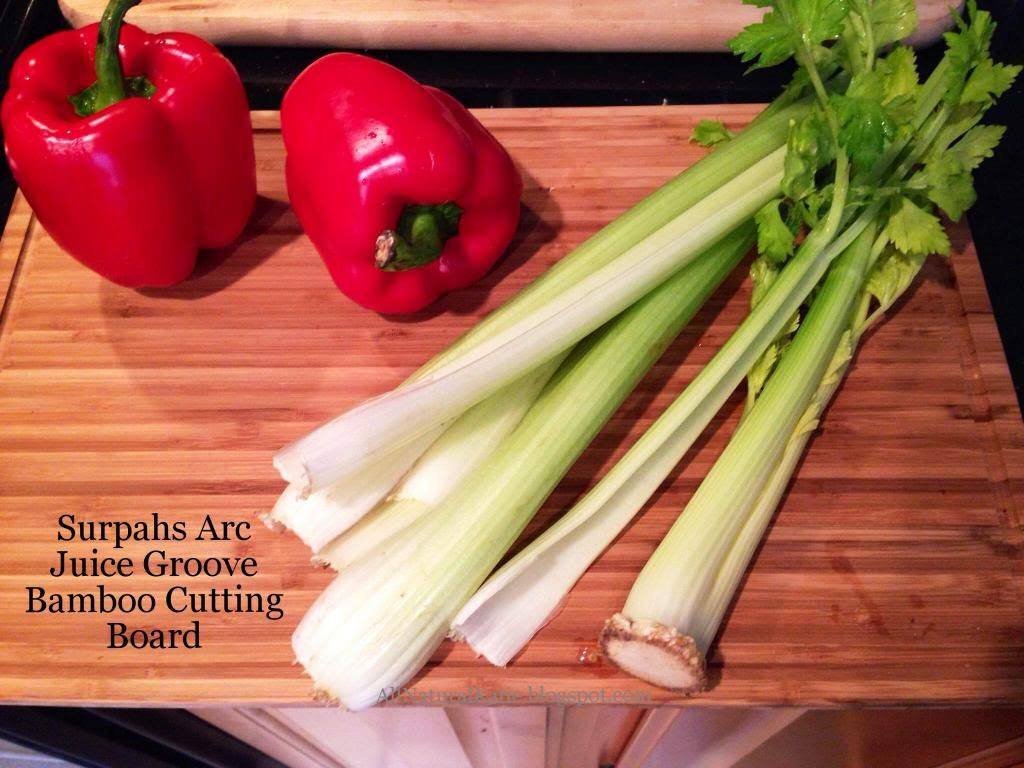
Surpahs Arc Juice Groove Bamboo Cutting Board has been used frequently in my kitchen. I like a bit cutting board to cut vegetables on or to roll out dough for scones. This cutting board is sized 17" x 11". Either side can be used. I have been using the size without the grooves to roll out dough. This side has edges that angle down. The grooved side would be great for cutting oranges or roasted chicken, which both could release a lot of juice. I like the ability to use either side. I have liked using the cutting board for different purposes. The knife does not get stuck in the wood and I can quickly chop vegetables for a meal.

Surpahs 3-Layer Overlapping Joins Bamboo Cutting Boards come in three different sizes: 8", 11", 13". I like the ability to use a smaller or bigger board depending on what I need cut (cheese, fruit, vegetables, etc.). These are a little bit thinner than the Arc Juice Groove Bamboo Cutting Board. The thinness helps to prevent cracking and splitting.

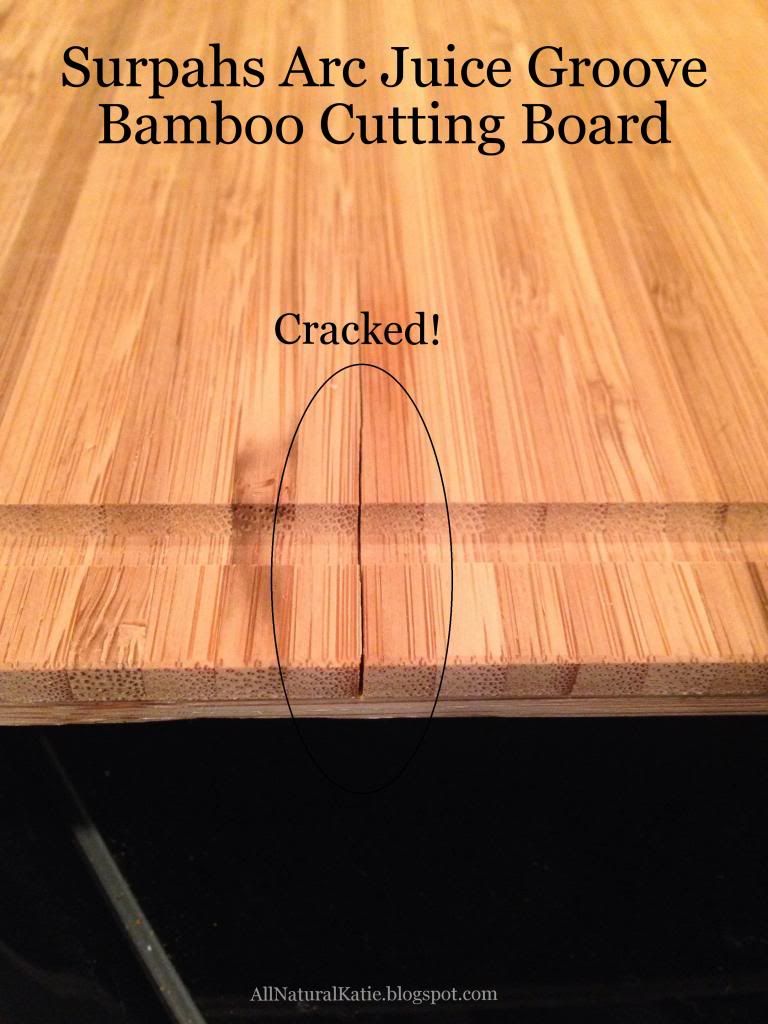
The construction of Surpahs wooden cutting boards (3-layers of overlapping joints) help to ensure no warping, cracking or splitting. Wooden cutting boards will split over time from moisture, whether you leave them in the kitchen sink or not. I always place any wooden cutting board on the counter by the sink to prevent this from happening. I did notice that after a few uses and washes of the Surpahs Arc Juice Groove Bamboo Cutting Board, the bamboo wood split on the side in the middle. There was also a crack on one of the edges, though this could have been due to where the wood was cut.

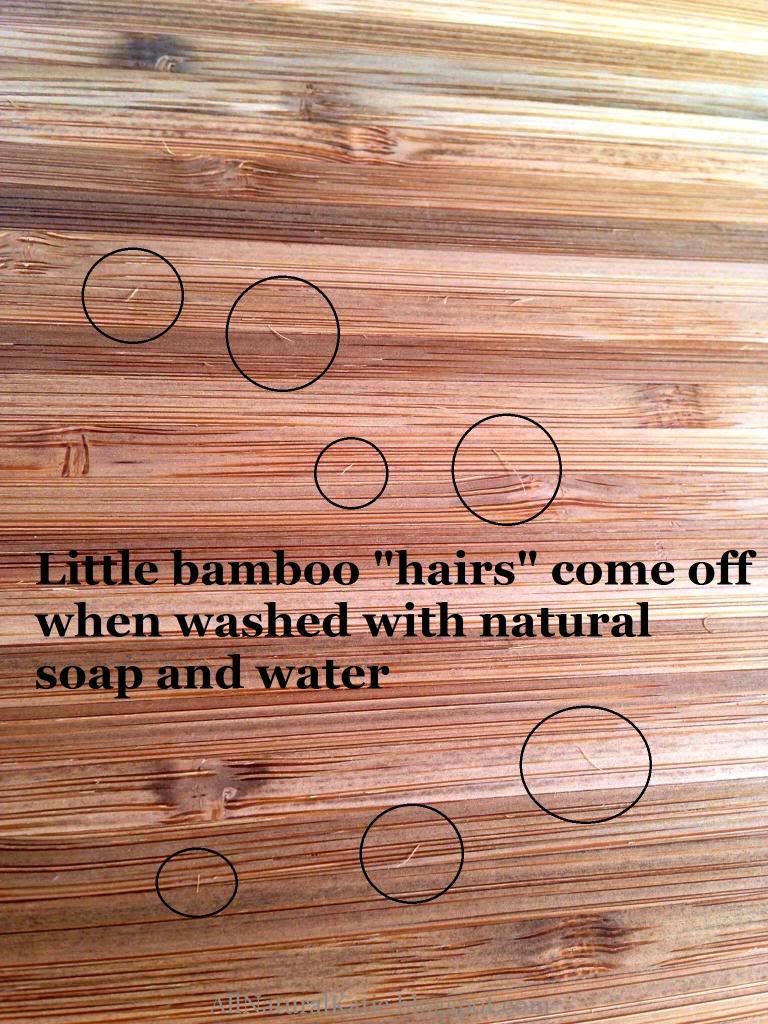
Washing the bamboo cutting boards with a natural soap and a soft bristled brush released little bamboo "hairs." If I use the cutting board afterwards, then the "hairs" get into my food. This makes me leery about using the cutting boards. I might try washing the bamboo cutting board by hand to see if less "hairs" come off.

Surpahs recommends applying mineral oil to the new cutting board surface, with reapplication once a month. Mineral oil is a petroleum based product, so please do your research if you are avoiding potentially toxic chemicals getting on and in your food. Applying oil to the bamboo cutting board will help to reduce the "hairs" that come off during use.

Surpahs Bamboo Cutting Boards are constructed of high quality eco-friendly bamboo in 3-layer overlapping joints of solid wood. Though cracking and splitting still did occur because of the nature of a natural wooden product. I have enjoyed using the cutting boards and will continue to use them, but I would NOT purchase these again.

UPDATE 12/16/2014: I have been using this board on a daily basis. I still love the big size of the board. The little bamboo "hairs" are no longer coming off (maybe this was an initial wear-in period thing). The bamboo board has continued to split and crack. I know how to properly take care of wood products. I clean with mild, all natural soap, rinse immediately and put to dry. I limit getting the bamboo wet as little as possible. After regular use of this cutting board, I would NOT RECOMMEND this product to anyone. My husband and I have both scratched and cut ourselves on the split bamboo pieces and cracks. The crack pictures above has become bigger and the wood has split at the joints. A lot of reviews might be positive because of the initial use, but after prolonged use, I found the board to be of low quality.

Disclosure: I received one or more of the products mentioned above at no cost to facilitate this review. Regardless, I only recommend products or services I use personally and believe will be good for my readers. All thoughts and opinions are my own.


Tuesday, March 25, 2014

Royal Fluff OS Pocket Diaper [Giveaway]

Royal Fluff cloth diapers bring you a fleecy soft interior and an ultra-comfortable trim fit. Royal Fluff pocket cloth diapers are your standard pocket diapers with extra features that make them the diaper that I will reach for first. Two rows of snaps, with 4 snaps on each side, paired with elastic at the back, give Royal Fluff diapers a great fit. Enter below to win a One Size (OS) Pocket Cloth Diaper from Royal Fluff.


Please use the Rafflecopter entry form below. Open to the US only. All entries will be verified. Duplicate and invalid entries will be deleted. 

Giveaway
Royal Fluff OS Pocket Cloth Diaper (ARV $23.99)
  
All Natural Katie is not responsible for sponsors who do not fulfill prize obligations.


Friday, March 14, 2014

Incandescent Light Bulb Ban

With her red wagon in tow, 8-year old Jill uses her lighting smarts to talk some sense into her parents, who are still using (far too many) traditional incandescent light bulbs in their home. Watch the intervention go down to see how Jill helps her family save money, time and energy with the three alternative lighting choices available to them. Learn more about the lighting choices available to you at Sylvania.


>> Have you been saving incandescent light bulbs in light of the 2014 ban??

Disclaimer: This post contains a sponsored link. By viewing the video, I will receive small compensation to support this blog at no additional cost to you. Regardless, I feature and recommend only brands and products that I myself would use.


Monday, February 24, 2014

Keeping the Trash in the Trashcan [#CTWW]


This week's challenge:

This 
week, pick up litter and dispose of it properly. As you go through your day, pay attention to the area and clean as you go. You might see trash as you walk between your car and your office. Perhaps you'll see plastic bags, etc. in the parking lot of a market. If you enjoy nature walks, browse the side of the trail. Get your kids involved and take litter walks or organize a neighborhood cleanup of a local park. The idea, this week, is to rid the area of litter!

An overfilled recycling box is open to the elements, like wind, that can blow paper and small containers out and down the street. Therefore, I
 would assume that moving from recycling boxes to recycling bins with lids with reduce the amount of trash that litters the yards on our street. Nope! On every run and every walk, I spot at least one piece of trash in several of the neighboring yards. I assume (hopefully correctly this time) that the trash escapes in between the worker picking up the recycling bin and the contents being emptied into the garbage truck. I also suspect that trash, usually empty cans, gets thrown out of cars that drive down the street. We live in a nice, mature neighborhood, so trash in the yards is not something I expect to see. Therefore, I have formulated a simple plan.

With the warmer weather, I will be getting outside more with the baby. We will bring a bag with us and collect any trash and litter we see in our neighbors' yards. We will then appropriately dispose of it by recycling, trashing, or composting (I have found a whole orange in our front yard before!). Change the World Wednesday challenges us to be the small change that collectively results in bigger changes. The baby and I will the small change to clean up our street. As he becomes older and starts to communicate more, I will ask him to help me find stray trash in our neighbors' yards. This will be a great way to make a positive impact and educate about taking care of the environment and the Earth.

>> How do you keep the trash in the trashcan??


Friday, February 21, 2014

Organic Baby Teething Toy Block [Review]

We conclude our series of eco-friendly baby teething products and toys. The focus here is on organic and/or natural products sold on Etsy. Babies are going to put these products in their mouth, so buying products made from natural and organic fabrics is a great investment. When babies are teething, they love to chew on everything. A sensory toy (block) with loops, ribbons, and a teething ring is the perfect combination for any baby or toddler. The Bird and Elephant Etsy store features the latest designer fabrics in 100% GOTS Certified Organic Cotton to create the perfect environmentally friendly, organic, natural teething toy.

Organic Baby Teething Toy Block       ($35.00)
Rating: total green check marks out of 5.

The Good
The Not So Good
100% Certified Organic fabrics/threads

Adorable designer fabrics

Natural wooden ring

Wood sealed with US Organic beeswax blend


Subject: 10 month boy
Background: Baby likes to chew on everything to relieve teething pain

I love baby products that have multiple purposes. A product that can serve a specific purpose and double as a toy is a winner in my book. Since the baby puts everything in his mouth, I want to make sure that his toys are non-toxic, provide sensory stimulation, and provide teething relief. I have always liked fabric baby blocks, so when I came across Bird + Elephant on Etsy, I loved the selection of baby teething toy blocks.

Bird + Elephant baby teething blocks are approximately 3"x3". They are made using 100% GOTS Certified Organic fabrics, organic threads and ribbons, a natural wooden ring, and filled with environmentally-friendly, all natural stuffing made from corn sugar. Teething blocks are also available without the wooden ring. The Cranes design block that I received has side with knit fabric and tags and sides with a very soft cotton fleece fabric and tags. The wooden ring is securely tied on, but can be removed for washing purposes. I love the adorable, designer fabrics. The bright colors and contrasting patterns are perfect for any child from newborns to toddlers. I also love that the fabric patterns are gender neutral.

My baby has loved playing with this block. From the moment that I opened it and held it out in front of him, he was excited. We have even played tug-o-war with it. He grabs onto the wooden ring and I grab onto a fabric tag on the opposite side; we gently pull back and forth. Not only is the baby teething block a great sensory and teething toy, but it also helps with motor and social development. The rattle inside is a great attention getter and entertainer.

Care: Remove wooden ring by untying fabric ribbon. Machine wash on gentle with warm water. Air dry or tumble dry on air or low heat setting. Fiber may shift during laundering. Gently massage the block with fingertips to move the fiber back into place.

Beth's inspiration for the high contrast and sensory focused baby teething blocks is heartwarming. She understands what infants, babies, and toddlers need and seeks to provide that through her organic baby teething toys. The high quality materials and certified organic fabrics make Birth+ Elephant products a great addition to any nursery and perfect baby shower gifts. Check out Bird + Elephant teething rings, which coordinate with the teething toy blocks.

Disclosure: I received one or more of the products mentioned for free to facilitate this review. Regardless, I only recommend products or services I use personally and believe will be good for my readers. All opinions are my own.


Friday, February 7, 2014

Bamboo Charcoal Deodorizers and Humidifiers [Giveaway]

Conventional home odor and moisture removal products are made from toxic chemicals and are usually packaged in plastic. Ever Bamboo brings one of the first natural products to deodorize and dehumidify in your home. Many tiny holes in bamboo charcoal acts as a deodorizer and dehumidifier. Bamboo charcoal is produced from the rapidly growing moso bamboo. Enter below to win a gift set of 4 Ever Bamboo products made from eco-friendly and sustainable bamboo charcoal.

Please use the Rafflecopter entry form below. Open to the US only. All entries will be verified. Duplicate and invalid entries will be deleted. 


Giveaway
Gift Set of 4 Ever Bamboo Products ($40 value):
Shoe Deodorizer
Mini Deodorizer + Dehumidifier
Close Deodorizer + Dehumidifier
Room Deodorizer + Dehumidifier

a Rafflecopter giveaway

Disclaimer: All Natural Katie is not responsible for prize fulfillment or shipping. The sponsor will be responsible for shipping the product to the winner of this giveaway.


Bamboo Charcoal Deodorizers from Ever Bamboo [Review]

Disclosure: I got this product as part of an advertorial.

Bamboo has become one of those products that you see almost everywhere. Bamboo furniture, bamboo kitchen utensils, bamboo clothing, even bamboo diapers. Bamboo charcoal is becoming more popular for home use. Many tiny holes in the bamboo charcoal acts as a deodorizer and dehumidifier. Bamboo charcoal is produced from the rapidly growing moso bamboo. Conventional home odor and moisture removal products are made from toxic chemicals and are usually packaged in plastic. Ever Bamboo brings one of the first natural products to deodorize and dehumidify in your home.

Ever Bamboo Charcoal Deodorizer      
Rating: total green check marks out of 5.

The Good
The Not So Good
Natural, free from toxic chemicals

Rechargeable, lasts up to 1 year

Compostable (biodegradable)

Unscented


I received three Ever Bamboo bamboo charcoal products to try:
  1. Room Deodorizer + Dehumidifier
  2. Shoe Deodorizer
  3. HEI Bamboo Charcoal Face + Body Bar
Our family usually does not generate a lot of trash. Therefore, we only take trash out once a week at the minimum. If food, especially animal products, gets thrown away in the trash, the trash smells after one week. I hate smelling trash every time I walk by the trash can, so I placed the Ever Bamboo Room Deodorizer + Dehumidifier packet in the kitchen, close to the trash can. After about 12-24 hours, I did not notice the trash smelling as I walked by it. Success! 

The Room Deodorizer + Dehumidifier was not used for humidity control since it is Winter and our furnace dehumidifier is set to low humidity. Once the Spring weather comes and brings rain showers, I will place the Room Deodorizer + Dehumidifier in the enclosed breezeway. The breezeway gets very humid when it rains. 

The Ever Bamboo Shoe Deodorizer went straight to my husband's work shoes. He rotates between two pairs of dress shoes. Dress shoes that cover feet all day get smelly and moist! This is where you want the bamboo charcoal to absorb smells and humidity. Each day, after he came home from work, I placed each of the Shoe Deodorizer packets in his dress shoes. After a few days, the dress shoes did not smell as bad as before. Another success!

The HEI Bamboo Charcoal Face + Body Bar is a neat little soap bar. This deep cleansing soap bar contains bamboo charcoal and is black in color. The bamboo charcoal powder penetrates the pores to draw out impurities. I mainly used this soap on my armpits because this body part tends to be the smelliest for me. The Body Bar did a great job at removing any smells. Although the soap bar does contain a few ingredients that are rated as 3 by EWG's Skin Deep Database, I like that the soap is naturally scented with Lavender. 

The bamboo charcoal can last up to 1 year. The packets can be recharged in the sun. Each month, place the pouches outside in direct sunlight, 2-3 hours per side. Get rid of those overly scented gels and beads that only cover up smells and get Ever Bamboo bamboo charcoal packets to remove odors and humidity from your home.

Win a 4 pack of Ever Bamboo products.

Disclosure: I received one or more of the products mentioned above for free using Tomoson.com. Regardless, I only recommend products or services I use personally and believe will be good for my readers. All opinions are my own.


Related Posts Plugin for WordPress, Blogger...