Showing posts with label pesticides. Show all posts

Monday, April 28, 2014

How I Save the Bees [#CTWW]

I have always been scared of bees because of the fear of getting stung. I remember walking through a grassy field when I was a kid and getting stung on the bottom of my foot. Ouch! As I have grown into an adult and started to question more of the world around me, I realized there is no need to be afraid of bees. Society makes us think that bees are dangerous. People always seem to run away from them. If you leave the bees alone, they will leave you alone. I tended to the tomato container garden behind the purple cone flowers being frequented by huge bumble bees with no stings. The buzz of the bumble bees actually became comforting for me.

Let's change our perception of bees to being the source of our food. Bees pollinate the majority of food crops in the world. Therefore, the decline of bees should alarm everyone. What foods will we lose if the bees are not around to pollinate the majority of worldwide crops?

This week's challenge:

This week, take action to protect honey bees. Please choose at least one action from the following list:
  • Plant at least one native, flowering plant in your yard. Avoid hybrid plants ... they don't produce enough nectar or pollen and are useless to bees and other pollinators.
  • Plant a vegetable garden.
  • Let pests live (natural pest controllers, like Lady Bugs, need them for food).
  • Keep your lawn and garden pesticide-free.
  • Eliminate chemicals in your home.
  • Provide a year-round, clean source of water for bees (rainwater collection, a small garden water feature, bird bath, etc.).
  • Leave some dead trees or plants in your yard ... bees will nest in them. Or, place a bee house in your garden.
  • Buy organic food.
  • Take up beekeeping.

As the gardening bug has already bit me for this season, I have been buying plants and planting, and buying and planting. I have spent a lot of time outside during the past week. As I do the daily "garden and yard tour," I have made notes about where I can apply the above actions to protect bees. Below, I cover what actions I have already implemented and the actions I am planning on implementing in the coming month.

Native, Flowering Plants
Every year, I purchase a 3-5 plants to plant in the garden bed in front of the house. I focus on perennial, cold temperature tolerant, flowering and deer resistant plants. A variety of different colored and sized flowers is important to attract different bees.

To Do - start a flower garden in the back yard, close to the vegetable garden. The blackberry and newly planted blueberries bushes also need some bees. Maybe I can add some flowering plants to the herb garden.

Question - how can I tell if the flowering plants are hybrid or not? I have been able to find some heirloom vegetable plants, but how do I know if the Shasta daisy or the phlox is a hybrid or not?

Vegetable Garden
Check! Vegetable garden, herb garden, blackberry and blueberry bushes in the back yard. Tomato container garden in front of the breezeway.

To Do - plant more herbs in the front garden bed (edible garden). They are deer resistant and edible.

To Do - expand the container garden in front of the breezeway is companion plants for the tomatoes.

To Do - add a water feature to provide clean source of water for bees.

Dead Trees and Plants
There is an area behind the back fence between us and the house behind us. Honeysuckle, wild grape vine, weeds and other random plants provide a natural habitat for animals, critters, and bugs. Whatever is too big for the compost or will take a long time to break down goes over the fence.

Chemical Free House and Yard
A bucket a day keeps the weeds away! I have reinstated the daily weed pulling, at least until I get most of them knocked down. I stopped using chemicals in the yard 3.5 years ago and after a couple of years of not pulling weeds, we have grown super weeds in the yard. Luckily, weed pulling is therapeutic and relaxing for me, so I have been spending 30-60 minutes outside during baby's naps pulling weeds.

>> Are there any features of your garden or yard that help to protect and sustain the bee population??


Sunday, April 29, 2012

Unjunk Your Junk Food by Avoiding Chemical Additives [Review]

Every time that I receive the Naturally Savvy newsletter, I am learning something new. Therefore, I was delighted to read and review the book, Unjunk Your Junk Food - Healthy Alternatives to Conventional Snacks. Whether you are a greenie or looking to make a few eco-friendly changes in your life, this book is perfect for you! Unjunk Your Junk Food will help you understand labels and ingredients and make better and healthier food choices when you are grocery shopping.

Unjunk Your Junk Food                         $12.32 (sources)
Rating: total green check marks out of 5.

The Good
The Not So Good
Quick reference guide

Informative

Colorful and easy to understand

Unjunk Your Junk Food would be perfect for the person who does not know where to start. You can look up your favorite junk food and quickly find a healthier alternative. One of my favorite parts was the Worst Ingredients List. I loved the explanations of different "nasty" ingredients and fillers. I finally understood why some of the "nasty" ingredients are actually nasty. Another favorite part were the colorful pages in the middle that depict bad and good choices for snacks. For example, Oreos are greatly loved by my extended family, but the ingredients include High Fructose Corn Syrup (HFCS) and Artificial Flavors (nasty stuff!). Unjunk Your Junk Food recommends buying County Choice Organics Sandwich Cremes Chocolate Cookies.


Instead of telling your spouse, family member, or friend that they are making bad food choices, hand them Unjunk Your Junk Food and tell them to read a few pages from the book. I was even surprised by some of the discoveries I made (and I eat very cleanly). If you are confused by the ingredients and claims on food labels, flip through a few pages of this book and you will immediately understand exactly what you should and should not eat. Your body and health will thank you for avoiding chemical additives. 

Disclosure: I received the sample from the company in order to facilitate my review. No other compensation was received. This product review is based on my personal experiences. This review is objective and completely honest.


Friday, March 9, 2012

Tell the FDA to Just Label It

Whether it is salmon genetically engineered to grow at twice its natural rate or herbicide-resistant corn that encourages the use of more chemicals in our food supply, we have a right to know what's in our food.

Already, more than 40 countries – including China and Russia – require labels on genetically engineered food. As Americans, we deserve the same opportunity to make informed decisions about what we eat. As more Americans know about genetically engineered foods, more pressure will build on the FDA to label GMOs.

Everyone has the right to make informed decisions about the food they eat as well. Tell the FDA to label GMO (genetically engineered) foods. Be an informed consumer!


Tuesday, March 6, 2012

Organic Fair Trade Clothing from Maggie's Organics [Review]

I have been exploring organic cotton clothing and sustainable clothing. Even though I try to buy natural fibers like cotton and wool, that does not mean that I am being environmentally friendly. Cotton is heavily sprayed with pesticides and can even be genetically modified. Add the manufacturing process and you have toxic chemicals touching your skin all day long.


I was very excited when I discovered Maggie's Organics in Whole Living Magazine. Let me tell you a little bit about Maggie's Organics. Maggie's Organics was founded in 1992 on the premise that workers should be treated ethically and that clothing should be durable, affordable, and constructed of environmentally sustainable materials. The apparel line, which includes Pants, Wraps, Hoodies, Dresses, Tanks, Camisoles and Scarves, was recently Fair Trade Certified™ under a new apparel pilot program developed by FairTradeUSA. (source: http://www.maggiesorganics.com)

Class Warm Tights: Solid Flat Knit Tights          $26.00
Leggings: Footless Tights - Ankle Length         $22.00
Rating: total green check marks out of 5.

The Good
The Not So Good
Organic cotton
Tights band is a little tight (I went up one size)
Reasonably priced

Great neutral color selection
Warm and comfortable


My Review: I received the Solid Flat Knit Tights and Footless Tights, both in Black. I was eager to open up the packages and try on the tights to see how they fit. I went up one size (getting Medium instead of my usual Small) because I do not like the "muffin top" look. I must say that the Medium fit perfectly in the waist, the legs, and the length. Usually when I go up to a Medium in tights and leggings, they are longer, but not wider. I am very pleased that the Medium fit me very well.

Uses: 
The Solid Flat Knit Tights look very similar to cotton knit tights (looser knit), but still paired well with my business professional skirt and heels. I was even warm enough walking in windy downtown during 30 degree weather.

The Footless Tights were comfortable when lounging around the house, wearing with knee-high boots, and even working out. The Footless Tights have a tighter knit than the Solid Flat Knit Tights. 

Overall Review: I am so pleased with the products and the fact that Maggie's Organics products are made with Certified Organic cotton that I am going to order more of the tights. I would love to try the Lightweight Fashion Tights for wearing to work. I would highly recommend both sets of tights for comfort, warm, and cost. Just remember to potentially go up a size to avoid a muffin top. Happy shopping!

Disclosure: I received the sample from Maggie's Organics in order to facilitate my review. No other compensation was received. This product review is based on my personal experiences. This review is objective and completely honest.


Wednesday, December 14, 2011

Wordless Wednesday - What is Whole Foods Thinking?

I bought these Meyer Lemons at Whole Foods. Read the part in the red box about three chemicals I have never heard of and am afraid to Google.

This picture proves that you and I should READ EVERY SINGLE LABEL.


Sunday, November 13, 2011

Getting Crunchy with Katie: Bloopers at the Farmer's Market

I shop at farmers markets several times each year, but I am not a regular shopper by any means.  I feel that they are always located "out of the way."  Maybe it is because most of them are only open one day a week.  Maybe it is because I cannot get all of my groceries in one stop.  Excuses!  Excuses!  Or, maybe it is the fact that I do not know the right questions to ask.  Today, I am bringing you some of my bloopers from the farmers market.

Check out the rest of my post at Mommy Living the Life of Riley: 
http://www.mommylivingthelifeofriley.com/eco-friendly-green-living/getting-crunchy-with-katie-some-of-my-bloopers-and-stupid-questions-at-the-farmers-market/


Thursday, November 10, 2011

In Search of Eco-Friendly Exercise Clothing

I participate in many different forms of exercise: running, DVDs, weight training, and most recently, yoga and cycling. Buying yoga clothing has been the most fun. Many retailers offer organic cotton options for yoga wear. However, I have had some difficulty finding appropriate clothing for cycling. My collection of boot cut exercise and yoga pants is not safe when I have extra fabric flapping around between the pedal and the chain.

I am in search of cycling pants and tops that are eco-friendly and non-toxic.  

Bicycle GreenMy Criteria (in order of importance):
  1. Eco-friendly fabric
  2. Eco-friendly dyes
  3. Comfort
  4. Style

I did some research.  In terms of fabric appropriate for exercise, I found options like organic cotton (hard to find for cycling clothing), wool, vintage polyester, and recycled polyester as being the best options. Bamboo is not on my list! Even though bamboo is touted as antibacterial and eco-friendly because it takes so little time to reach maturity, the process of transforming bamboo into fabric is very extensive. Toxic chemicals are used to liquefy the wood and turn it into a fabric similar to rayon. Bamboo itself is good, the process to transform it into fabric is far from being environmentally friendly. I know there are companies out there that sell eco-friendly and sustainable bamboo, but I have not found them yet!

What other types of fabrics can I look into?

What brands are going to be the best?  


Wednesday, November 9, 2011

There is a Place and a Time

I have a small group of "green" ladies at work. I love chatting with them about organic foods or the latest discovery of a nasty chemical that is added to processed foods. However, there is a place and time to have these types of conversations. This week, I learned this lesson the hard way. Let me tell you about my experience.

I am currently working a team made up of a few men who are 40 years old and older. We have a pretty good team dynamic and have been working well together. During one meeting, we got on the topic of soft drinks (pop, soda, whatever you call it). As usual, I got on my soap box about the nasty ingredients in soft drinks, especially in diet soft drinks. The team knows that I eat organic and shop at Whole Foods, so it should not have been a surprise that I have an opinion about the health hazards of soft drinks. A few minutes into this discussion, and I was being told that they hope I continue this "excitement" about healthy living as I get older, followed by laughing.

What is this supposed to mean?!?

This is not some fad that I'm going through, this is a complete change. Obviously, I haven't gotten the point across that this is my lifestyle now.

Did they put me down because I am younger and therefore, not as "wise?"

I might not be as wise about life in general because I am younger, but I bet I know a whole lot more about healthy, green, and eco-friendly living.  I am going to try not to take this personal. I am going to take this as a challenge to get my point across better and know when to keep my mouth shut.


Thursday, November 3, 2011

To GMO or Not To GMO?

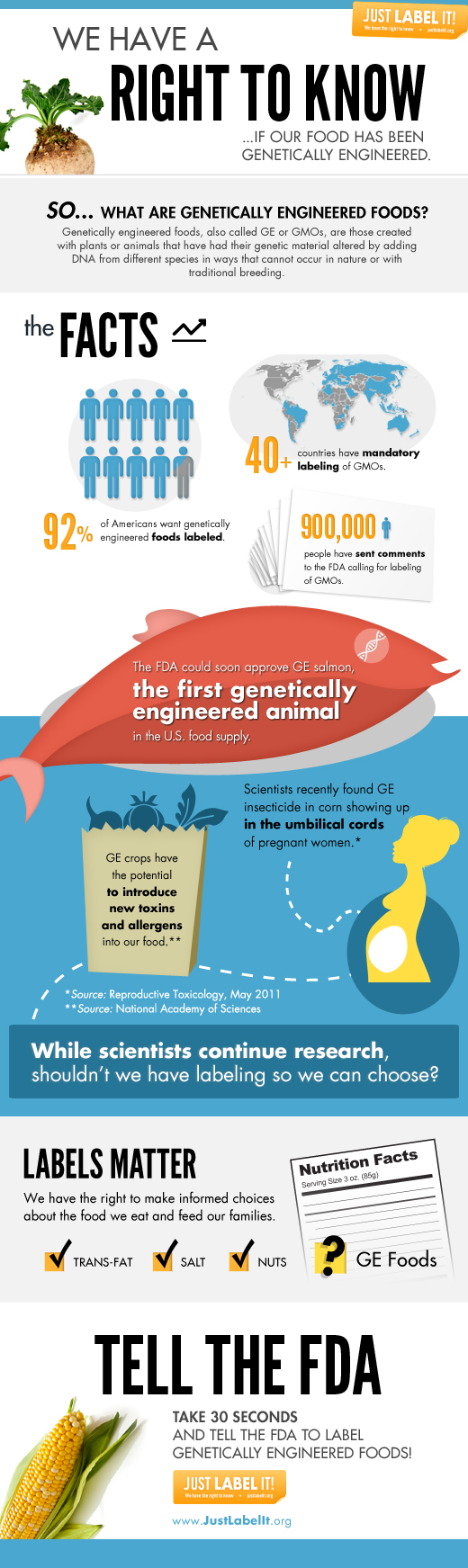
Have you heard about GMO? While the acronym itself might not sound bad, the fact that the organisms (in this case, crops like fruits and vegetables) are genetically modified is a scary practice that is quickly becoming the standard, if not already. The most startling piece of information below is that USA is the highest producer of GMO crops and does not mandate that they are labeled.

Corn, soybeans, canola, and cotton have been identified as the crops that are usually genetically modified. Read below to understand the negative impacts of GMO.

Source: http://www.treehugger.com/green-food/87-percent-americans-want-genetically-modified-foods-labeled-infographic.html


Saturday, October 22, 2011

Getting Crunchy with Katie: Why Your Next Bottle of Wine Should be Organic Wine

Although I drink wine all year long, the fall is a perfect time for thinking about wine because the grapes are picked and begin their process toward becoming wine.  

My first experience with organic wine was in Napa Valley, California.  My mom and I started our wine tasting day at an organic winery.  We were not impressed at all.  For the past three years, I’d written off organic wines as being mediocre, not worth spending money on when there are so many more delicious wines to be experienced.  One trip to a local wine store completely changed my perception.

Click over to my post at Mommy Living the Life of Riley Blog to learn why your next bottle of wine should be organic wine.  I think you will also be pleasantly surprised: 
http://www.mommylivingthelifeofriley.com/eco-friendly-green-living/getting-crunchy-with-katie-top-3-reasons-why-your-next-bottle-of-wine-should-be-organic-wine/.

>> Have you ever tried organic wine?  What did you think?


Related Posts Plugin for WordPress, Blogger...