Showing posts with label challenge. Show all posts

Sunday, September 7, 2014

Zero Waste at the Grocery Store [#CTWW]

Zero Waste challenges are one area where I can improve. These challenges are always difficult for me. I am not sure why. I few years ago, I made a huge switch to green and eco-friendly products, including reusable grocery bags, reusable menstrual products, cloth diapers, etc. I still feel like a lot of packaging gets thrown away, recycled, and in some rare instances, reused. My focus on this round of the Zero Waste challenge will be the grocery store.


This week's challenge:

This week, look for one more way to reduce the amount of waste you generate. Need some inspiration? Check out the Zero Waste Week Facebook Page and scroll through the posts for tips and ideas. Perhaps buy "naked" produce (items without any kind of packaging), carry a reusable bag at the market, or find creative uses for leftover food. If you have a baby in the house, try cloth diapers (nappies) and reusable wipes rather than the disposable varieties. Consider reusable menstrual products instead of single-use items. Find creative ways to upcycle "trash" or donate used items to charity. The idea, this week, is to find one more way to reduce waste.

There are two Whole Foods Markets in our city. We shop at the second one every couple of months if we are around that area, usually after Sunday morning church.

One of my favorite aisles at the grocery store is the bulk bin aisle. The Whole Foods Market that I frequent most often has a big bulk section. Shopping in the bulk bin section allows me to purchase exactly how much product I need or want. Let's say I need 1 cup of a specific type of bean or I want to fill up my quinoa container. Though the bulk bin allows reusing of your personal container (have the cashier weigh your container before you fill it), most people, including me, use the plastic bags and containers that are provided. Usually, the plastic bags and containers are reused another time, but I ultimately throw them away or recycle.

I have not been able to bring myself to lug my glass containers to the store when they empty. I cannot even remember to take the recycling that Rumpke does not accept to Whole Foods. How do I reduce my reliance on plastic bags and containers??? The second Whole Foods Market in our city has solved this problem, or at least made it better! No more plastic bags and containers for the dried bulk bin goods. These have been replaced with brown paper bags! Take a pencil, write down the name and the number of the product. The brown paper bags can be reused, recycled or composted. My plan is to reuse for lunches and then compost. While recycling does require energy, composting is a more eco-friendly option that requires no energy.

I hope my preferred Whole Foods Market switches to brown paper bags. I will speak with an employee next time to see if they have considered this option. In the meantime, I will be reusing the small brown paper bags in the bulk bin aisle.

>> How do you reduce waste during your grocery shopping trips??


Monday, August 11, 2014

5 Ways to Extend Life of Clothing [#CTWW]

I just completed round 8 of closet clean out. The decluttering started about 2 years ago when my husband and I found out that we were expecting a baby. Once we realized that our closets were stuffed full, we knew that we needed to get rid of stuff we no longer used. Clothes were the biggest culprit. Transitioning from a college wardrobe to a professional wardrobe resulted a large number of pieces of clothes that were no longer worn, but still took up room in the closets and dressers. As we were cleaning out the items that we were no longer going to wear, we created a mend pile. The mend pile is comprised of pieces of clothing that need to be mended: a button needs reattachment, a hole needs to be sewn up or a stain needs to be removed. In an effort to reduce future mend piles, I share with you tips on how to extend the life of clothing.


This week's challenge:

This week take a look at your clothing and fix anything which needs repair. This might include darning a sock, sewing up a rip, or replacing a lost button. Perhaps a shoe's sole needs to be glued or a shoe lace needs to be replaced. The idea, this week, is to repair an item of clothing to extend its life.


OR ...

If this is something which you regularly do, please offer tips and ideas for extending the life of clothing. This can include mending, laundering, or even buying for longevity.

While there are easy and simple ways to mend clothing, taking a preventative approach to keeping clothing in good shape is the best way to go. Below are five tips on how to extend the life of clothing.

Purchase Quality Clothing

Focus on purchasing clothing that is made from 100%, or mostly, natural fibers like cotton, linen, wool, etc. Some synthetic items can last a long time also. Quality clothing could be an investment, but is also going to last longer than cheaper clothing that might only be worn for one season. I have a lot of high quality items purchased on sale or on clearance that have lasted me for 5-10 years. Shopping at consignment and thrift stores can reduce the cost of high quality clothing. 

Use Appropriate Washing Techniques

Follow the recommended washing instructions on the clothes' tags. Most natural and synthetic items can be machine washed, but some do require a gentle cycle, hand washing or even dry cleaning. From my experience, most dry cleaning items can be hand washed at home. Dry cleaning often can also cause clothes to break down due to the harsh chemicals that used in the dry cleaning process. Also, remember that washing too often can cause clothes to become worn and faded. Hanging an item that was worn for only a few hours to air out can save you one washing cycle.

Line Dry Clothes

Line drying clothing reduces the amount of stress on the item of clothing. The lint in the dryer is actually small fibers of clothing that have come off during the agitation against other items that are also in the dryer. Line drying will make them a bit stiff. If you prefer the softness of clothes dried in the dryer, you can throw the line dried clothes in the dryer for 10-20 minutes to fluff them up. 

Make Repairs Sooner

Treating stains the same day and repairing holes as soon as they are discovered will help to prevent stains from permanently setting in and holes from getting bigger. The longer a stain stays on clothing, the harder it will be to remove it. Wearing a sweater with a small hole in it will inevitably cause it to become bigger. When you remove clothing, or when you gather laundry, do a check for stains, holes and rips. Put those items aside and take care of them as soon as possible.

Rotate Clothing

Rotating clothing in your closet not only will keep you excited about your wardrobe, but it will also help to extend the life of clothing. Wearing the same 3 items over and over again will cause the fabric to stretch out and wear down over time. For example, natural fibers need time to return to their original length after being stretching out from being worn. Once a month, rotate 3-5 pieces of clothing with the ones in the back of the closet.

These five ways to extend the life of clothing will help keep you mend pile to a minimum and help to keep your costs of replacing worn clothing or paying high prices for the dryer cleaners to remove stains.

>> How do you extend the life of your clothing??


Monday, August 4, 2014

Proper Alkaline Battery Disposal [#CTWW]

Somehow, Small Footprints' Change the World Wednesday challenges always come at just the right time. Either I recently accomplish a small green milestone or I am currently struggling with a change. Last week, I decided to update the car emergency kits. I came upon some batteries and decided to do a battery inventory. The battery drawer had some loose batteries. After my husband said that those batteries are mostly dead, I was about to throw them into the trash. Until a little voice inside my head reminded me that I once read about not throwing batteries into the trashcan. Indeed, a quick search revealed that alkaline batteries (the ones I have on hand) are indeed toxic. Alkaline batteries should NOT be thrown into the trash. Alkaline batteries should be disposed of properly, at a location that accepts them.


This week's challenge:

If you are not using rechargeable batteries, please make plans to buy them when you next need batteries. As you replace single-use versions, be sure to recycle them rather than toss them into the trash bin.


OR ...

If you have already made the switch to rechargeable batteries, please find one single-use item in your home and replace it with a reusable version.

As mentioned in Reduce Footprints challenge post, 3 billion single use batteries are sold each year! Most of these batteries end up being thrown out with trash. Batteries degrade over time and leak toxic chemicals into the landfill. These toxic chemicals end up in the water and in the soil. 

After realizing this fact, I looked up recycling facilities for alkaline batteries. We live in a big city, so I hoped for several companies accepting alkaline batteries. Results: one company. Best Buy does have a recycling program, but they do not take alkaline batteries. I emailed the company for a quote for 2 pounds of batteries. Since I had such a small amount, they proposed that if I like their Facebook page and/or write a review, I can drop them off for free. Now, I am wondering if I should save up batteries and do a big disposal once per year. I do not mind paying for the alkaline batteries to be disposed of properly. 

Our battery usage is fairly small. I do not purchase battery operated toys for my son. Any battery-operated toys that are gifted are either exchange, used until batteries run out or are used without batteries. The majority of battery usage is for television remotes, flashlights (seldom used) and for emergency purposes. I do not watch television during the day. Our total television usage is less than 10 hours per week and is mostly watched by my husband when he is home. The remote batteries last for a long time. Either way, we are using batteries and we can be greener about it, especially since they need to be disposed of properly.

After my research and reflection on battery usage in our house, I told myself that I must look into rechargeable batteries. While we do have a few of them already, we are not using them. Last year, I purchased 2 AA USB rechargeable batteries to add to the emergency kit. Though rechargeable batteries are an investment, they have come down in price over the years and they will save me money in the long run. Next shopping trip, purchase rechargeable batteries!

>> Do you use any rechargeable batteries are home?? How??


Tuesday, May 20, 2014

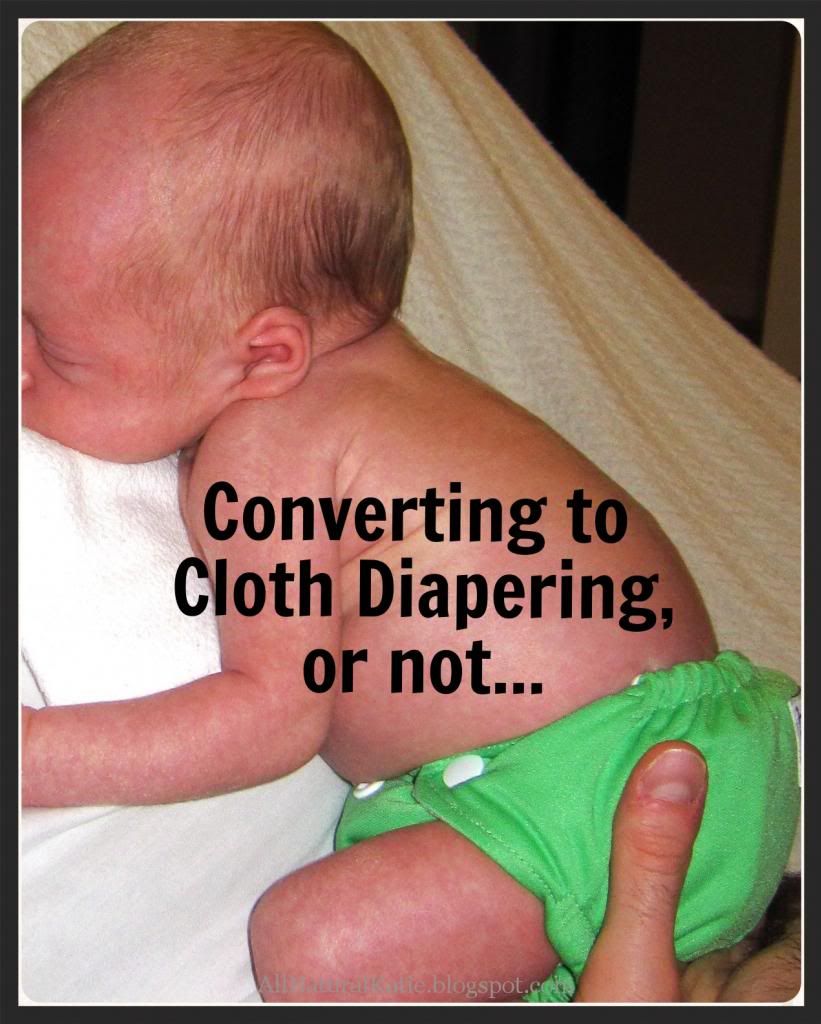
Converting the Husband to Cloth Diaper, or Not [#CTWW]

I have made it such a long way toward living green, yet I have so much longer to go. Is this not always the case? Between trying to change a husband that might not understand some of my motives behind living green to raising a toddler to expect green living as the standard practice, I feel both challenged and empowered. When I thought of a big green living obstacle that I have overcome, there were many, but one stood out in my mind - cloth diapering!

This week's challenge:

This week share environmental good news. Unlike the challenge we did in November (see it HERE), which asked that we talk about all good news, let's focus on our personal triumphs. For example, if you were able to overcome a green-living obstacle (recycling, composting, etc.), we'd like to share in your good news. Perhaps you are preparing to plant a garden this year or have upgraded appliances to energy-efficient models ... let us celebrate with you. Maybe you've realized successes like turning off the water while brushing your teeth or turning off lights when you leave the room ... we want to be inspired by your achievement. The idea, this week, is to share all the good, green stuff in our lives.

I knew I wanted to cloth diaper even before I became pregnant. The concept of cloth diapering was foreign to my husband, though he himself was cloth diapered. I spent the whole pregnancy trying to convince him of the benefits. I even had a "show and tell" with the cloth diapers that I had acquired. He was firmly against it. Maybe it was the foreignness of the idea or maybe it was the horror stories he had heard about cloth diapering, he said, "no!" It was his hard limit. 

A lot of persistence on both of our parts resulted in a decision - we will use both cloth and disposable diapers during a trial period. If the cloth diapers did not work out during the trial period, we would use the most non-toxic disposable diapers that were available to us.

During my maternity leave, we make the decision that I was going to leave the corporate world and stay at home with the baby. After this decision was made, I knew that I could make my goal of cloth diapering happen. We never really talked about whether to cloth diaper or not again. We evolved into cloth diapering during the day (by me) and a disposable diaper at night (by my husband) and whenever my husband would change the baby on the weekend. We also use disposables on any trips away from home for more than 1 day. 

My husband is still weirded out by cloth diapers. He will gladly take off a cloth diaper and put a disposable on. However, In times of disposable diapers being "code red" (on our last diaper), he will accept putting on a cloth diaper. 

I realized my task is not to convert other people, but to do the best that I can do. Staying at home full time with the baby has allowed me to cloth diaper. I am grateful to be able to reduce our impact on our the environment and put a few more dollars in our wallet. 

>> What are your thoughts about cloth diapers?? Would you try them??


Monday, May 5, 2014

Don't Circle, Park and Walk [#CTWW]

Parking lots. Parking garages. As soon as I leave my house and arrive at my next destination(s), a parking spot is on my mind. Even when visiting friends, I often think, "do I park in the driveway or on the street?" At a store or mall, I can choose between the closest spot to the door, the closest spot to the shopping cart return or even the garage. Throw a baby into the mix, and a new decision has to be made every time.

This week's challenge:

This week, park in the first available parking space and then walk the rest of the way. The goal is to use very little fuel once we enter the parking area. It's a small thing with a big impact. And ... it's great exercise!

My standard parking practice is "pull through." If the parking lot is not too busy, I try to look for a spot where I could pull through. I do not have to back out. Plus, pulling forward out of a parking spot is easier than backing out. 

When this opportunity is not available, I usually opt for the spot closest to the door or to the shopping cart return (especially if I have the baby with me, which is most of the time). 

This week, I have been more mindful about where I park. I was presented with a couple opportunities. 

First, a Whole Foods Market shopping trip at 9:00 AM on Sunday morning. Empty parking lot. I felt weird parking in the first available spot, which would be at the end of the parking lot, and walking to the front door. I opted to pull through a parking spot. Fail! As I walked to the front door of the store, I asked myself, "Would it really matter if I parked at the end of an empty parking lot?" No, it would only take 1 minute extra to walk the parking lot. 

Second, a visit to the library to pick up a few books. I entered the parking lot from the side entrance and parked in the first spot. It was a little bit closer than if I entered from the back of the parking lot, but I decided that walking for an extra 20 seconds was not going to make a impact on my time.

When I stopped to think about it, taking the first spot in a parking lot instead of circling around to find the closest one did not have a big impact on my time. It did have an impact on my wallet. Less fuel translates to less money I have to pay for filling up the car. Success!

>> What your eco-friendly parking strategies??


Monday, April 28, 2014

How I Save the Bees [#CTWW]

I have always been scared of bees because of the fear of getting stung. I remember walking through a grassy field when I was a kid and getting stung on the bottom of my foot. Ouch! As I have grown into an adult and started to question more of the world around me, I realized there is no need to be afraid of bees. Society makes us think that bees are dangerous. People always seem to run away from them. If you leave the bees alone, they will leave you alone. I tended to the tomato container garden behind the purple cone flowers being frequented by huge bumble bees with no stings. The buzz of the bumble bees actually became comforting for me.

Let's change our perception of bees to being the source of our food. Bees pollinate the majority of food crops in the world. Therefore, the decline of bees should alarm everyone. What foods will we lose if the bees are not around to pollinate the majority of worldwide crops?

This week's challenge:

This week, take action to protect honey bees. Please choose at least one action from the following list:
  • Plant at least one native, flowering plant in your yard. Avoid hybrid plants ... they don't produce enough nectar or pollen and are useless to bees and other pollinators.
  • Plant a vegetable garden.
  • Let pests live (natural pest controllers, like Lady Bugs, need them for food).
  • Keep your lawn and garden pesticide-free.
  • Eliminate chemicals in your home.
  • Provide a year-round, clean source of water for bees (rainwater collection, a small garden water feature, bird bath, etc.).
  • Leave some dead trees or plants in your yard ... bees will nest in them. Or, place a bee house in your garden.
  • Buy organic food.
  • Take up beekeeping.

As the gardening bug has already bit me for this season, I have been buying plants and planting, and buying and planting. I have spent a lot of time outside during the past week. As I do the daily "garden and yard tour," I have made notes about where I can apply the above actions to protect bees. Below, I cover what actions I have already implemented and the actions I am planning on implementing in the coming month.

Native, Flowering Plants
Every year, I purchase a 3-5 plants to plant in the garden bed in front of the house. I focus on perennial, cold temperature tolerant, flowering and deer resistant plants. A variety of different colored and sized flowers is important to attract different bees.

To Do - start a flower garden in the back yard, close to the vegetable garden. The blackberry and newly planted blueberries bushes also need some bees. Maybe I can add some flowering plants to the herb garden.

Question - how can I tell if the flowering plants are hybrid or not? I have been able to find some heirloom vegetable plants, but how do I know if the Shasta daisy or the phlox is a hybrid or not?

Vegetable Garden
Check! Vegetable garden, herb garden, blackberry and blueberry bushes in the back yard. Tomato container garden in front of the breezeway.

To Do - plant more herbs in the front garden bed (edible garden). They are deer resistant and edible.

To Do - expand the container garden in front of the breezeway is companion plants for the tomatoes.

To Do - add a water feature to provide clean source of water for bees.

Dead Trees and Plants
There is an area behind the back fence between us and the house behind us. Honeysuckle, wild grape vine, weeds and other random plants provide a natural habitat for animals, critters, and bugs. Whatever is too big for the compost or will take a long time to break down goes over the fence.

Chemical Free House and Yard
A bucket a day keeps the weeds away! I have reinstated the daily weed pulling, at least until I get most of them knocked down. I stopped using chemicals in the yard 3.5 years ago and after a couple of years of not pulling weeds, we have grown super weeds in the yard. Luckily, weed pulling is therapeutic and relaxing for me, so I have been spending 30-60 minutes outside during baby's naps pulling weeds.

>> Are there any features of your garden or yard that help to protect and sustain the bee population??


Tuesday, April 15, 2014

Why We Don't Take the Bus [#CTWW]

This week's challenge:

This week, for at least one day, leave your car parked. Instead, walk or ride a bike.

OR ...


If you don't drive or can't do without your car, please choose other actions designed to reduce air pollution. Need some ideas? Avoid power tools (such as lawnmowers, weed whackers, leaf blowers, etc.) and use manual tools instead. Stop smoking! Choose water-based products (paints, solvents, etc.) instead of products which contain harmful volatile organic compounds (VOCs). Avoid commercial indoor air fresheners. Drive smart (accelerate slowly, turn off the engine if the car is stopped for more than 30 seconds, combine errands for one trip, etc.). Reduce energy use (much of the world's energy is derived in ways which pollute ... think smoke stacks). Add house plants to your home. Plant a tree. Use natural, safe cleansers. Buy locally produced items (reduces transport pollution).

The first thing I thought of when I read this week's challenge was taking the bus. Taking the bus is one of the easiest and most accessible ways to reduce your carbon footprint on the environment. While taking the bus to work is often thought of as a cheaper alternative than driving your car, most people do not ride the bus to be environmentally friendly. In our culture, riding the bus carries the stigma that one cannot afford a car. Maybe someone who earns a low income or someone who does not have a job at all. Riding the bus (for purposes other than work) has a negative connotation attached to it.

When I worked in the corporate world, people would talk about taking the bus to/from work and how much money it was saving them. Never once did I hear about someone taking the bus to the grocery store or to the post office. And never once did I think about taking the bus to Whole Foods. I even despised taking the express bus to work when my husband and I would travel and he would pick me up on the way out of town. Something about having to play by someone else's schedule...

Why wouldn't one take the bus to locations other than work? 

First, it would take a lot longer to take the bus to the grocery store than to drive there. While work routes are usually express routes, regular city routes have many more stops. Maybe people would choose to drive over the bus because it would take longer. Though if you live closer to a grocery store, it might not take too much longer. Whole Foods Market is a 12-15 minute drive from my house. Taking the bus would end up taking closer to 30 minutes (one way).

Second, the western world is focused on achieving the status of having your own car. Most teenagers are probably thinking all the time about saving up to buy a car and/or getting their driver's license. There is something about having this freedom and independence to go where you want to go. Taking the bus means that you are dependent on someone else. Furthermore, taking the bus might give the perception that one cannot afford a car. Many people might not want that perception. 

Growing up, my parents had one car, so a lot of travel within city limits was by bus. I remember standing for long periods of time waiting for buses with my mom or my grandma. Personally, I have a negative perception of taking the bus because it reminds me of a challenging time in my childhood. 

Whether or not I have this perception or connotation, it does not mean that I should never take the bus. In the meantime, while I work up the courage to take the bus, I will walk and run. With the recent warmer temperatures, I have tested the following simple plan: run with the baby in the jogging stroller around the neighborhood, then walk to the shopping center (1/2 mile away) to take care of small errands (mailbox, library, Walgreens, clothes shopping, wine/beer shopping, etc). This plan has worked well and I look forward to taking care of errands car-free while getting my runs in during the day. 

>> What are your thoughts on riding the bus? Love it? Hate it?


Monday, March 10, 2014

Two Outfit Challenge [#CTWW]


This week's challenge:

This week, choose two outfits and wear them exclusively for the week. This does not include undergarments. To make this challenge work, do not wash clothes more often than usual. If you feel that your clothing needs freshening up, try hanging it in the bathroom while you shower ... or hang it outside for "airing". The idea is to see if we can live with less while maintaining water conservation and good environmental practices.

OR ... If you absolutely need more than two outfits this week, please do an analysis of your closet. How many items do you have? Where (which country) were they manufactured? Are you aware of the factory working conditions in that part of the world? What materials are used? Are any natural fibers dyed or bleached? If cotton is used, is it organic? Do any items include plastic (buttons, trim, etc.)? Take an honest look at your closet. Once you've gathered the results, how could you make your wardrobe more Eco-friendly?

Even though I stay at home with a baby every day, my thirst for fashion and looking stylish has not changed. I still think about how I present myself through my wardrobe and I still love to go shopping. Shopping does not mean that I necessary purchase anything. I like to look, select, and try on, but I seldom buy. Maybe it is the result of a one income household or maybe it is because I spend most of my days at home in yoga tights or maybe it is because I realized how big of a wardrobe I really had. I love nothing more than purchasing a new outfit, but when I run out of closet space, it is time to reconsider whether I really need another pair of jeans or another sweater. This week, I am participating in the Two Outfit Challenge. 


My goal was to select two outfits that can be mixed and matched. Since I usually wear outfits, especially jeans several times before washing, the "challenge" part of the challenge will be to only wear two outfits. This might even help to reduce the stack of clothes on the cedar chest that my husband hates so much. 

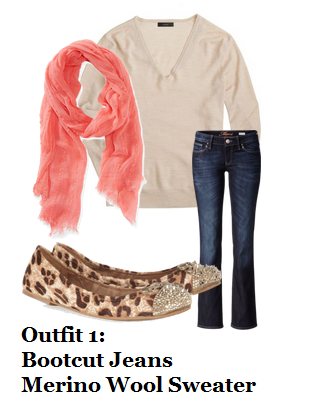
Outfit 1: Bootcut jeans, merino wool sweater

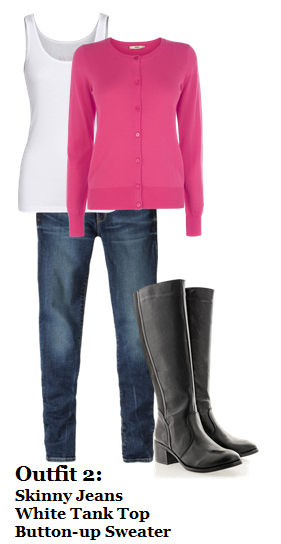
Outfit 2: Skinny jeans, white tank top, button-up sweater

Since the temperatures warmed up a little, I have been opening the windows in the breezeway and using the chairs as clothing racks. Why have I not been doing this all along? Growing up in Eastern Europe, my family hung clothes outside on clothes lines to "air out" in the sun every day. I will strive to do this more often during the warmer months.

Switching between two pairs of jeans was very easy for me. I have lost weight since being pregnant and giving birth; my pre-pregnancy jeans are all big on me except for a pair of skinny jeans and a new pair of bootcut jeans I purchased last year. Basically, only two pairs of jeans in my closet fit me now.

The two sweater limitation was difficult. I found myself wanting a little more variety than just two sweaters. After 4 days, I became sick of the same two sweaters. However, since I mostly stay at home during the days, it was not as hard as if I left the house every day. "Airing out" the sweaters was a must. Using the breezeway helped to keep the sweaters fresher than throwing them on the cedar chest (my usual practice).

Although the two outfit challenge was a little difficult for me in terms of a variety of clothing items that I am usually used to wearing, I believe I could move forward with something like a six item challenge or a 3-5 outfit challenge. The beauty of this challenge is that I can continue to do it every week or every month, choosing different outfits each time. My biggest lesson learned was using the breezeway with the windows open to "air out" clothing instead of washing it more frequently. 

>> Would you be able to only wear two outfits for one week??


Tuesday, March 4, 2014

Tips to Reduce Water Waste [#CTWW]


This week's challenge:

To begin, test your water conservation knowledge by taking this QUIZ

THEN ... Install at least one low-flow aerator on a faucet in your home. These are relatively inexpensive from hardware stores and are easily installed (just screw them on).

OR ... If you've already installed aerators on your faucets, choose one other way to conserve water this week. Need some ideas? Eat no meat, pork or poultry (they all require a lot of water to produce). Reduce or eliminate spending (except for true essentials). Keep a pitcher of drinking water in the refrigerator instead of running the tap. Review your water bill history to determine periods of high use and make plans to reduce during those times (it's also a good tool for determining leaks). Fix leaky faucets or toilets. Consider removing some of the lawn (or all of it) and planting native shrubs, plants, trees, etc. When refreshing your pet's water, or changing the water in a fish tank, use it to feed your plants. Get creative and find a way to reduce your water footprint.

I am starting off this post about water conservation by admitting that I have reduced focus on water conservation. It all started almost one year ago when I gave birth. Conserving water took a back seat to taking care of a baby 24x7. Ok, ok, for months, I stopped watching how much water we were using. We now had a little bundle of joy that required cloth diapers, washing dirty clothes, and baths. 


The CTWW challenges brought me back into focus though. The challenges are a little voice in the back of my head, reminding me to reduce my footprint on the world. This week's challenge sparked my thinking about water conservation. Here is a list of my action items to reduce our water footprint. Some of these have already been implemented and some will be implemented in the coming month.
  1. Reduce the amount of water used for washing cloth diapers by switching cycles.
  2. Reuse grey water to water indoor plants.
  3. Save grey water and add to water barrel for outdoor plants.
  4. Use rain barrel to water garden.
  5. Keep water pitcher in fridge.
  6. Vegetarian with a splash of vegan fast for lent (and potentially longer!).
  7. Do not water the lawn during the summer.
The most surprising action we already do is not watering the lawn during the summer. Why? Because in the 4.5 years we have lived in our house, we have never watered our lawn. How this slipped by my must-have-green-manicured-lawn husband, I do not know! But, I am not complaining!

My biggest goal for the Spring and the Summer is to fill the water barrel with grey water from household chores like water leftover from rinsing fruits and vegetables. I keep an old bowl and instead of running water and using a colander, I fill the bowl with water and wash everything in it. Sometimes, I have to refresh the water 2-3 times depending on how dirty the vegetables are, but the water will go into the watering can and/or rain barrel.

Awareness is the first step to finding creative ways to conserve water, our most precious resource. Just thinking about how much we use water on a daily basis, from hygiene to cooking and cleaning.

>> What are some ways that you conserve or can start conserving water??


Monday, February 24, 2014

Keeping the Trash in the Trashcan [#CTWW]


This week's challenge:

This 
week, pick up litter and dispose of it properly. As you go through your day, pay attention to the area and clean as you go. You might see trash as you walk between your car and your office. Perhaps you'll see plastic bags, etc. in the parking lot of a market. If you enjoy nature walks, browse the side of the trail. Get your kids involved and take litter walks or organize a neighborhood cleanup of a local park. The idea, this week, is to rid the area of litter!

An overfilled recycling box is open to the elements, like wind, that can blow paper and small containers out and down the street. Therefore, I
 would assume that moving from recycling boxes to recycling bins with lids with reduce the amount of trash that litters the yards on our street. Nope! On every run and every walk, I spot at least one piece of trash in several of the neighboring yards. I assume (hopefully correctly this time) that the trash escapes in between the worker picking up the recycling bin and the contents being emptied into the garbage truck. I also suspect that trash, usually empty cans, gets thrown out of cars that drive down the street. We live in a nice, mature neighborhood, so trash in the yards is not something I expect to see. Therefore, I have formulated a simple plan.

With the warmer weather, I will be getting outside more with the baby. We will bring a bag with us and collect any trash and litter we see in our neighbors' yards. We will then appropriately dispose of it by recycling, trashing, or composting (I have found a whole orange in our front yard before!). Change the World Wednesday challenges us to be the small change that collectively results in bigger changes. The baby and I will the small change to clean up our street. As he becomes older and starts to communicate more, I will ask him to help me find stray trash in our neighbors' yards. This will be a great way to make a positive impact and educate about taking care of the environment and the Earth.

>> How do you keep the trash in the trashcan??


Friday, December 6, 2013

Holiday Random Acts of Kindness

Imagine being the parent of a 10 month old baby who is told he would not live past the age of 1 because of spinal muscular atrophy type I. The baby grows up to become a teenager, 14 years old, but is left with no movements in his body. Lucas Hoelscher is this teenager, part of triplet sons, can only communicate through eye movements and sounds. Because his day is so routine, he enjoys being read to, which helps in dealing with a difficult disease.

Lucas's wish for the holiday is mail! From anyone, near and far. From you!

Lucas Hoelscher
3092 Wyandot Drive
Springfield, Ohio 45502

What a perfect way to perform random acts of kindness during the holiday season. Send a card, a letter, or some of your child's artwork!

You can also join Lucas's Facebook group, Letters for Lucas, if you prefer to communicate digitally.


Monday, November 25, 2013

Preparing For The Winter Months

I have been posting a lot of review and giveaway posts lately, so I thought I would share a personal post. I am grateful to try new-to-me eco-friendly and natural products. Maybe they will inspire gift ideas for the Holidays. In our neck of the woods, the temperatures have fallen and the clouds cover the sun most of the days. The trees have lost all of their leaves. Anyone who goes outside is bundled up tightly. I am glad to see that the neighbors continue to go outside for walks and runs, even with their babies. Aside from spending my days caring for and playing with a baby, keeping the house in order, and trying to get out of the house often, we are busy with the following activities.

Winterizing the Yard

I am always a little sad when it is time to winterize the yard because it means that the colder months are here. The garden has been cleaned up. I am letting the plants dry up and will till them under the soil instead of composting. This method will put nutrients back into the soil. I put away the garden hose and watering can into the garage. The rain barrel has also been put up. Bushes have been pruned back. I left some of the leaves that gathered around the front garden bed plants to act as natural mulch for the winter.

Preparing for the Holidays

 photo ReusedGiftWrapping_2_zps0cc5f3a2.jpgGift lists are traditionally exchanged among our family at Thanksgiving. Therefore, we have been busy creating a gift list for ourselves and the baby. Check out my Green Baby Holiday Gift Guide for eco-friendly and green gift ideas for a baby. This year, we decided to do holiday gift shopping online to save time, money, and be environmentally conscious. Buying online reduces our carbon footprint because we are not driving to the store. Yes, the item is still being transported, but it is only transported once instead of twice (shipped to the store and then we drive to buy it).

Working Out Indoors

I cancelled my gym membership a few months ago. Gasp! After having the baby, I preferred to spend time with the baby instead of going to the gym and putting him in the gym's day care. We recently bought a jogging stroller, so I am able to run during the day. My husband found our old Jillian Michael's workout DVDs. I will continue to run outside as long as it is safe with the jogging stroller and transition to the workout DVDs.

Decluttering the House

November and December have become our months for cleaning out clutter and donating old and unused items to Goodwill. We also save items for my parents' neighborhood garage sale in May. Even though we have done a mass decluttering of the house every December for the past 3 years, we always find something that we can donate or pass on to someone else. There is nothing better than getting rid of old and unused stuff that someone can find a use for. Goodwill and Freecycle are the best ways to find a new home for an old or unused item.

I cannot believe this year is almost over. We began the year with me being pregnant and preparing for the arrival of our first baby. We have experienced lots of joys, and some challenges, with this new chapter and we look forward to ending this year on a positive note by spending time with our families.

>> How do you end the year? How are you preparing for the Holiday season??


Tuesday, November 12, 2013

How To Green Your Husband [#CTWW]


This week's challenge:

This week invite someone to join you in a green activity. Need some ideas? Invite a friend to go for a walk ... and perhaps pick up litter as you go. Ask a family member to help you plan and cook a meatless meal. Swap clothes, tools, books, etc., with a neighbor. Start a "green club" with your friends and meet occasionally to share green tips and ideas. Host an Eco-friendly cleaning party at a friend's home. Do laundry together ... or join forces to rake up leaves. Be creative and have fun. The idea, here, is to share an experience so that a green activity which you care about will become important to someone else as well.

The more I thought about this week's challenge, the more stumped I became. I was looking for a grandiose activity with a friend or family member. I wanted to make a big impact this time. And then I realized, that Change the World Wednesday Challenges are not about making a big impact. Yes, we would all love it if we made a big impact each time, but I feel this group of greenies is more about small changes by many people, which add up to big changes over time. I took a step back and asked my husband for his thoughts as we drove to Whole Foods. 

Let me provide a little bit of a background. From some of my previous posts, you might know that my husband hasn't quite jumped on the eco-friendly bandwagon. Sometimes, he actively opposes my green efforts. He takes two sheets of paper towels, he throws something that can be composted in the trash, and he claims that he supports the plastic industry (when I want wooden toys for our baby). Most of the time, I think he does this because he feels like I am shoving eco-friendliness down his throat and mandating that things be done a certain way. Yes, I am a control freak! (LOL) Side note for myself: compromise more and he will also. Aside from these minor examples, my husband does a lot to reduce our impact on the environment. He cleans with all natural cleaners, asks which recycle bin something goes into, and even built me a garden cage a few years ago. 

Now, back to driving to Whole Foods. My husband thought about our weekend and listed a number of items that we did together. While I usually garden and take care of flower beds by myself, he helped me this weekend. While he was raking leaves, I came out with the baby and asked if he could help do a few quick things. He trimmed the peonies and placed in the compost bin, he helped pick a few carrots from the garden, and recommended some improvement to the garden for the next year. 

I reflected on these activities and realized that my husband has come a long way from gathering leaves into plastic (or paper) bags and setting out for trash pick up. We either compost the leaves, throw them over the back fence (lots of trees), or rake them to the end of the yard for leaf pick up. My lesson learned is that I need to ask him for help with garden stuff more often. Together, we can make a positive impact. 

I wonder if I could get him to give up some of the yard to expand my gardening....maybe I'll tackle this one next year!


Sunday, November 10, 2013

Carrot Souffle for a Vegetarian Thanksgiving [Recipe]

For the last few Thanksgivings, I have gone meat-free. No turkey or ham for this gal! You can read about my first vegetarian Thanksgiving and the vegetarian Thanksgiving recipes I made last year. I am continuing my personal tradition this year with Easy Cranberry Sauce and a new recipe, Carrot Souffle.

The Carrot Souffle is quick and easy to prepare and turns out to be soft clouds of carrot goodness. The first time I made this recipe, I could not believe how amazingly delicious the dish turned out. My husband and I agreed that this would make a perfect dish for a family Thanksgiving dinner. Although I was inspired by The Fresh Market Carrot Souffle dish in their prepared food case, the original recipe comes from Cooking Light magazine and has been adapted by me.

Carrot Souffle

Yield: 6 servings, about 7 cups
Prep time: 20 minutes
Baking time: 40 minutes

Vegetarian, Cane Sugar Free, Grain-Free (sub non-grain flour)

Ingredients:
7 cups chopped carrots (about 2 lbs)
1/3 cup honey (can sub sugar or agave syrup; can add more sugar if prefer sweeter)
1/4 cup sour cream (for vegan: sub 1/4 cup non-dairy creamer and 1 tsp vinegar)
3 tbsp flour (all purpose, whole wheat, or non-grain flour)
2 tbsp coconut oil (can sub butter, unsweetened applesauce, or pumpkin puree)
1 tsp baking powder
1 tsp vanilla extract
1/4 tsp salt
3 large eggs, lightly beaten

Note: I add 1-2 tbsp of homemade Pumpkin Pie spice. I also add 1 tbsp of nutritional yeast. Fall/pumpkin spices can also be added to enhance the souffle.

Directions:
  1. Preheat oven to 350 F.
  2. Oil/butter a 2 quart baking dish.
  3. Cook carrots in boiling water for 10-15 minutes until very tender; drain.
  4. Place cooked carrots in food processor (be careful, carrots will be hot) and process until smooth. Can also use a potato ricer.
  5. Add remaining ingredients and process until mixed.
  6. Spoon into prepared pan. 
  7. Bake for 40 minutes. Souffle should be puffed and set. 
  8. Enjoy!

Nutrition:
Based on above ingredients, one cup of the baked Carrot Souffle has about 200 calories and 5.6g protein.

My next goal is to adapt this recipe to be vegan. Do you have any suggestions for an egg-free souffle??


This recipe was adapted by All Natural Katie based on another recipe. If you post the recipe on a blog/website, please link back to the original post or cite the original post. If you see this exactly recipe anywhere else, please email me.


Tuesday, November 5, 2013

Random Acts of Green Kindness [#CTWW]


This week's challenge:


This week, perform a random act of green. Similar to a random act of kindness, the idea is to help the planet by looking for Eco-friendly opportunities which may present themselves as you go through your day. This could be picking up trash while you walk or helping an elderly neighbor bring their recycling bin to the curb for pickup. Maybe you turn off a light which was left on, offer to carpool to save gas, or share local produce with a friend. Perhaps buy a reusable bag or bottle for someone or invite a neighbor to share a vegan meal. The possibilities are endless! 

"Leave the world a better (greener) place than you found it" is my mantra. 

As I was taking a walk with the baby this week, I realized that my random act of green kindness is picking up trash in other people's yard. I do not know if drunk people drive down the street at night and throw empty cans on the road or if the trash people are careless, but I always find an empty soda or beer can in our yard or our neighbor's yards. Or, the latest advertising, in the form of paper coupons in a plastic cup in a plastic bag, from Domino's Pizza. Or, paper advertisement with small pebbles in a plastic sandwich bag. Is this the new way to advertise? Throw it into people's yards? So, I usually carry a plastic bag with me (necessity when you have a baby) and use it to collect any trash I see on our walks. 

On a similar note, during the last visit to my parents' house, I went for a run while they watched the baby. As I was completing the run, I saw a young boy, around 12 years old, walking in the grassy median with a trash bag. I watched him for a little bit to figure out what he was doing. To my surprise, he was collecting trash! Wow! What an inspiration! 

>> What random acts of green kindness can you do??


Monday, October 28, 2013

Reduce BPA Exposure from Food Packages [#CTWW]


This week's Change the World Wednesday challenge comes at just the right time. I have been working on my emergency preparedness kit and restocking the pantry with what else by canned and prepackaged items. To make things a little more interesting, the challenge in front of me is as follows.

This week ban BPA from your life. Need some ideas? Avoid canned foods, including prepared soups, vegetables, sauces, soda and beer. Don’t microwave polycarbonate plastic food containers. Say no to printed receipts; they contain BPA. 

An audit of my pantry showed a number of items in cans. Since can lining potentially contains BPA, my task is to find these products in safer containers. The table below shows the items, the container I usually purchase these products in and what changes I plan on making to the container. 


Some items are only available in cans, so I will plan on freezing or caning (in glass jars) the fresh vegetables myself. I prefer to eat vegetables fresh, so the items I buy in jars are mostly legumes and vegetables.

Product BPA Package Non-BPA Package
Beans Can Buy and store dry in glass
Tomatoes Can Freeze or can fresh in glass
Tomato Sauce Can Glass jar
Soup Can Aseptic (paperboard carton)
Jalapenos Can Freeze or can fresh in glass
Coconut Milk Can TBD

A little side story for you...

During the last grocery trip, I was shopping for ingredients to make a Chicken Tortilla Soup recipe that called for canned tomatoes. As I stood in the canned goods aisle, the little "greenie" on my shoulder reminded me of this week's challenge. I turned around and went back to the produce section to pick up 5 tomatoes. I decided they would taste better and I would eliminate exposure to BPA and one more can going into the recycle bin.

>> What are some items in your pantry that can be switched for BPA-free packaging??


Wednesday, October 16, 2013

Wordless Wednesday: Rotten Fruit

I strive to be good about not wasting food, but sometimes life (and babies) get the best of us. Four organic nectarines and one homegrown Purple Cherokee tomato are going in the compost. :(


Tuesday, September 24, 2013

To Fan or Not To Fan [#CTWW]


My goal is to get back to participating in the Change the World Wednesday challenges. This week's challenge:

This week we are joining my friends at Fanimation in celebrating the the first ever National Ceiling Fan Day (NCFD). Did you know that the average central cooling unit draws anywhere from 3,500 to 5,000 watts of energy? Compare that to the 6-30 watts used by a ceiling fan and we quickly see why ceiling fans are energy efficient. So, for at least one full day this week, power off your air conditioners and rely on ceiling fans and/or portable fans to keep cool.

Ahh, air conditioning! How I love thee; let me count the ways! Don't get me wrong, I don't like for the temperature in the house to be freezing, but I am not a fan of humid air. It's sticky! 

As I read this week's challenge, I wanted to do an inventory of ceiling fans and potential for installing more ceiling fans. Currently, we have the following: one fan on the furnace unit (used sometimes during the summer), two small personal fans (used only during minor flooding in the basement), ceiling fan in the breezeway (using during the summer). Our house has zero ceiling fans. We have thought about installing ceiling fans upstairs because it gets a little toasty in the summer, but have not found suitable fans for the shorter ceilings (cape cod house). The bedroom is an option for a ceiling fan. My husband would love to have a ceiling fan on while he sleeps during the night, but I hate something blowing on me while I sleep. We have not pulled the trigger on this installation.

Back to the challenge. I realized I have been doing this week's challenge without even knowing it. The air conditioner has not been turned on for longer than one week (I can't even remember the last time). I have been keeping the windows open during the day and at night when possible. I ran the fan unit one afternoon when the air was a little humid. Since the summer is coming to an end, my goal is not to turn the air conditioner on anymore. Now, I need to decide when to turn on the heat. Eek!

>> Do you have ceiling fans? Do you use them instead of using the air conditioner??


Thursday, August 29, 2013

Finding Natural Laundry Detergent While Traveling

My family and friends know that I am not a light packer. I like to be prepared for most situations. Even if we are traveling to a warm destination, I will bring one outfit for cooler weather. You never know when there will be a cool or hot day. Add a baby into the mix and my husband and I joked that we should have purchased a bigger vehicle. As I was packing for our 5 night out of town trip, I wondered if I needed to bring my natural, baby friendly detergent. I decided against it since we agreed to use disposable diapers while out of town. What I failed to realize from being less than experienced with "baby on board" travel is that baby clothes/blankets/etc. will inevitably need to be washed for some reason.

On a quest for natural, baby friendly laundry detergent we go! I did not want to buy a full sized product, so my mom and I went looking for a sample size. The local Whole Foods was smaller than the Whole Foods that I usually shop one. The only detergents available were Whole Foods 365 brand and Method. I have my reasons for not using Method cleaning products, so that brand was out, and I did not have enough background on the Whole Foods 365 brand to feel comfortable purchasing a whole container. No luck at Whole Foods.

Mom and I continued our journey to Buy Buy Baby. I located two brands: BabyGanics and Rockin' Green. Rockin' Green detergent is on my list of natural, baby safe detergents, but I just could not allow myself to buy a whole bag for this one time. Yes, I could have brought it home, but I have so much laundry detergent at home already. (I made a deal with my husband last year that I would hold off buying laundry detergent until I went through most of what I had in the laundry room). The BabyGanics brand did have a small sample size for three washes. Unfortunately, the last ingredient in the list was fragrance. I avoid fragrances in body and cleaning products if I know they are in there. No luck at Buy Buy Baby either.

In the end, I did not buy a natural laundry detergent and ended up washing in only hot water. I added laundry detergent to the family packing list to avoid finding myself in this situation again.

>> Have you found yourself in a similar situation? What did you do??


Thursday, July 18, 2013

What Will Your Legacy Be?

"I hope my achievements in life shall be these...that I fought for what was right and fair, that I took risks for things that mattered, that I helped those in need, that I left the earth a better place because of what I did and who I was." ~Go For It! A celebration of your dreams

>> What will your legacy be??


Related Posts Plugin for WordPress, Blogger...